English
 Español
 tiếng việt
 русский
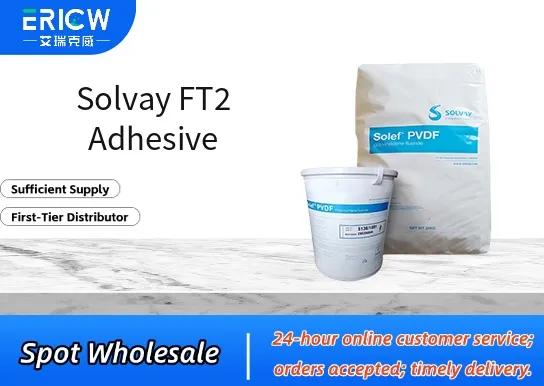
High-performance two-component epoxy adhesive system with excellent thermal stability up to 180 °C continuous service.
Outstanding chemical resistance to aviation fuels, hydraulic fluids, and common solvents.
Low viscosity formulation enables precise dispensing and superior gap-filling capability (up to 1.5 mm).
Meets ASTM D3433 for structural bonding performance and MIL-STD-883 Method 2019 for adhesion reliability.
RoHS-compliant and halogen-free formulation suitable for aerospace and high-reliability electronics assembly.
Aerospace composite-to-metal bonding in airframe and engine nacelle assemblies.
Structural bonding of turbine blade shrouds and heat-resistant housings in gas turbine systems.
Die attachment and underfill encapsulation for high-power semiconductor modules.
Bonding of sensors and actuators in harsh-environment automotive powertrain applications.
Repair and refurbishment of carbon-fiber reinforced polymer (CFRP) components in defense platforms.
| Chemical Type | Two-part modified epoxy resin system |
| Product Form | Part A: Low-viscosity liquid; Part B: Reactive hardener paste |
| Appearance | Part A: Pale amber transparent liquid; Part B: Off-white paste |
| Mix Ratio (by weight) | 100 : 35 (A:B) |
| Cure Schedule (typical) | 2 hours at 120 °C followed by 1 hour at 150 °C |
| Glass Transition Temperature (Tg) | ≥ 175 °C (DMA, tan δ peak) |
| Primary Applications | Structural bonding, potting, and encapsulation in aerospace & power electronics |
| Key Features | Thermal stability, fuel resistance, low outgassing, CTE match to composites |
Contact With Us:
E-mail: wangxingqiang@ericwchem.com
Have a Questions? Call Us:
Add:
Building A1, Jiete Industrial Park, Huangpu District, Guangzhou City, Guangdong Province, China