Technical Data Sheet of Tylose® HS 30000 YP2 CAS No. 9004-62-0
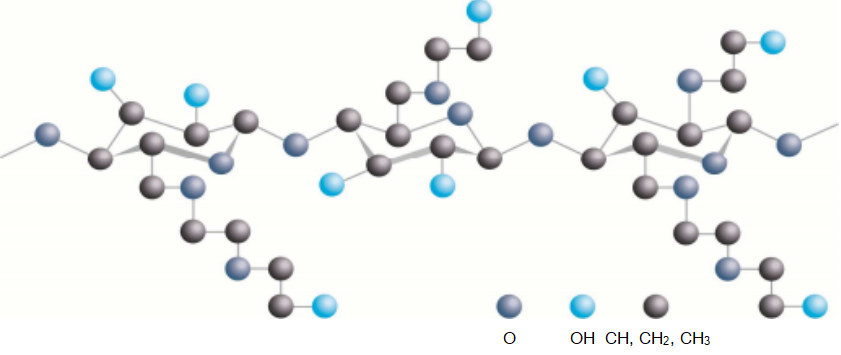
Product Properties of Tylose® HS 30000 YP2 CAS No. 9004-62-0
| Constitution: | Hydroxyethyl cellulose |
|
|
| Etherification: | high etherification | Delayed solubility: | yes |
| Particle size: | powder | Biostability: | yes |
| Level of viscosity: | 30000 mPa·s |
|
|
According to Höppler
Recommended Fields of Application of Tylose® HS 30000 YP2 CAS No. 9004-62-0
Technical Data Sheet of Tylose® HS 30000 YP2 CAS No. 9004-62-0
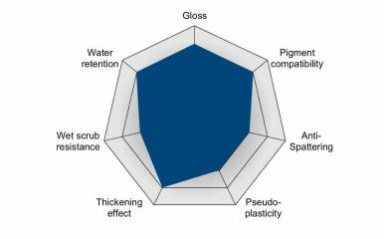
Application Performance of Tylose® HS 30000 YP2 CAS No. 9004-62-0
| Gloss: | high | Thickening effect: | high |
| Pigment compatibility: | high | Wet scrub resistance: | moderate |
| Anti-Spattering: | moderate | Water retention: | high |
| Pseudoplasticity: | moderate |
|
|
Packaging, Storage, Safety Instructions of Tylose® HS 30000 YP2 CAS No. 9004-62-0
Like all fine-particle organic substances, cellulose ethers constitute a dust explosion hazard. Dust formation and deposits must be kept to a minimum so that no ignitable dust/air mixtures can form. Ignition sources such as naked flames, hot surfaces, sparks and static electricity should be avoided. Tylose starts to decompose at about 200°C. Its ignition temperature is >360°C. Tylose burns easily and the fire may spread.
When stored in closed containers, or in its original packaging in a dry place at room temperature, Tylose can be kept for a long time. In the case of high viscosity grades,a slow loss of viscosity can be measured after lengthy storage (>1 year). Tylose absorbs water from moist air. Once opened, container must be resealed and kept tightly closed.
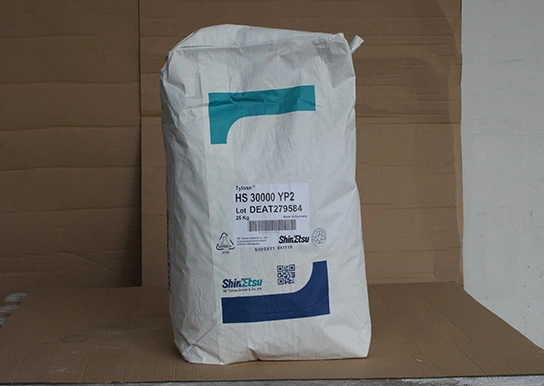
This Tylose-type is supplied in multi-ply paper bags with polyethylene intermediate layer and/or in big bags.
Tylose® HS 30000 YP2 – Frequently Asked Questions (FAQ)
Q1: What is the primary functional role of Tylose® HS 30000 YP2 in formulations?
A: Tylose® HS 30000 YP2 is a high-viscosity, non-ionic hydroxyethyl cellulose (HEC) derivative designed primarily as a rheology modifier and thickener. It provides excellent water retention, pseudoplastic flow behavior, and stable viscosity build-up in aqueous systems without requiring pH adjustment or neutralization.
Q2: Is Tylose® HS 30000 YP2 compatible with common preservatives and other additives used in personal care or industrial applications?
A: Yes, Tylose® HS 30000 YP2 demonstrates broad compatibility with typical cosmetic preservatives (e.g., parabens, isothiazolinones), surfactants, electrolytes, and most water-soluble active ingredients. However, compatibility testing under actual formulation conditions—including shear history and storage temperature—is recommended for critical applications.
Q3: How should Tylose® HS 30000 YP2 be dispersed to avoid agglomeration or fisheyes?
A: For optimal dispersion, it is recommended to pre-mix the powder with a water-miscible liquid (e.g., glycerin or propylene glycol) or add it gradually under high-shear mixing into the aqueous phase. Direct addition to cold water without agitation often leads to surface hydration and clumping; gentle heating (up to 50 °C) may accelerate full hydration once dispersion is achieved.
Q4: Does Tylose® HS 30000 YP2 offer any performance advantages over standard HEC grades in high-shear or long-term stability applications?
A: Compared to conventional HEC types, Tylose® HS 30000 YP2 delivers enhanced resistance to mechanical degradation during processing and improved viscosity retention over extended storage—particularly in formulations exposed to repeated pumping, homogenization, or ambient temperature cycling.
 English
 Español
 tiếng việt
 русский