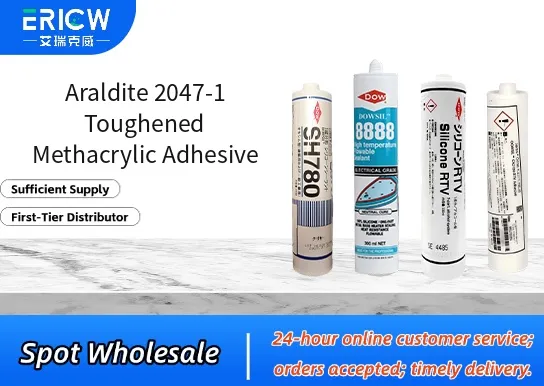
Two-component, fast-curing toughened methacrylate system with excellent impact resistance and peel strength.
Superior adhesion to low-surface-energy substrates including polypropylene (PP), polyethylene (PE), and thermoplastic elastomers without primer.
High tolerance to surface contamination and minimal substrate preparation required.
Good gap-filling capability with thixotropic consistency for vertical and overhead applications.
Excellent resistance to thermal cycling, humidity, and automotive fluids such as oils and coolants.
Automotive assembly: bonding of plastic trim, grilles, emblems, and under-hood components.
Transportation: structural bonding of composite and hybrid materials in rail and bus interiors.
Industrial equipment: durable attachment of nameplates, sensors, and housings onto metal and engineered plastics.
Electronics enclosures: robust bonding of polycarbonate and ABS housings requiring vibration resistance.
Aerospace ground support equipment: non-structural bonding where rapid fixture and environmental durability are critical.
| Chemical Type | Toughened methacrylate adhesive (two-component) |
| Product Form | Cartridge system (10:1 volumetric mix ratio) |
| Appearance (Mixed) | Off-white, viscous paste |
| Primary Applications | Structural and semi-structural bonding of metals, thermoplastics, composites, and elastomers |
| Key Features | Fast fixture (5–10 min), room-temperature cure, no mixing equipment required |
| Benefits | Reduced process time, high bond reliability, compatibility with automated dispensing |
| Shelf Life (Unopened, 25°C) | 12 months from date of manufacture |
| Storage Conditions | Store at 15–25°C; protect from moisture and direct sunlight |
Q1: What substrates does Araldite 2047-1 bond effectively to?
A: Araldite 2047-1 delivers strong, durable bonds on a wide range of engineering substrates including metals (e.g., steel, aluminum, stainless steel), thermoplastics (e.g., ABS, polycarbonate, acrylic), and thermosets (e.g., fiberglass-reinforced composites). Surface preparation—such as degreasing and light abrasion—is recommended for optimal performance.
Q2: How long does it take for Araldite 2047-1 to achieve handling strength and full cure?
A: At ambient temperature (23 °C), the adhesive typically reaches handling strength in approximately 30–60 minutes. Full cure and development of maximum mechanical properties generally occur within 24–72 hours, depending on part geometry, ambient conditions, and substrate thermal mass. Elevated temperatures (e.g., 60–80 °C) can significantly accelerate the cure process.
Q3: Is Araldite 2047-1 suitable for structural bonding applications requiring impact resistance?
A: Yes—this is a key feature of the formulation. As a toughened methacrylic adhesive, Araldite 2047-1 combines high tensile and shear strength with enhanced peel and impact resistance compared to standard acrylics. It is commonly selected for demanding structural assemblies where vibration damping and resistance to dynamic loading are critical.
Q4: Can Araldite 2047-1 be used in outdoor or weather-exposed applications?
A: When fully cured, Araldite 2047-1 exhibits good resistance to humidity, rain, and UV exposure—making it suitable for many exterior industrial applications. However, prolonged direct UV exposure may lead to surface discoloration over time; for extended outdoor service life, protective coatings or design considerations (e.g., joint shielding) are advised.
Contact With Us:
E-mail: wangxingqiang@ericwchem.com
Have a Questions? Call Us:
Add:
Building A1, Jiete Industrial Park, Huangpu District, Guangzhou City, Guangdong Province, China
 English
 Español
 tiếng việt
 русский