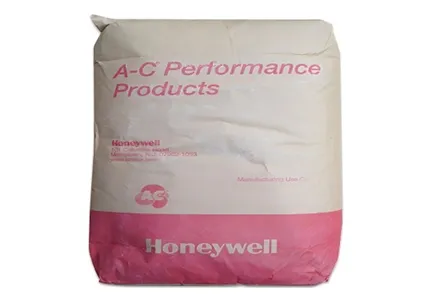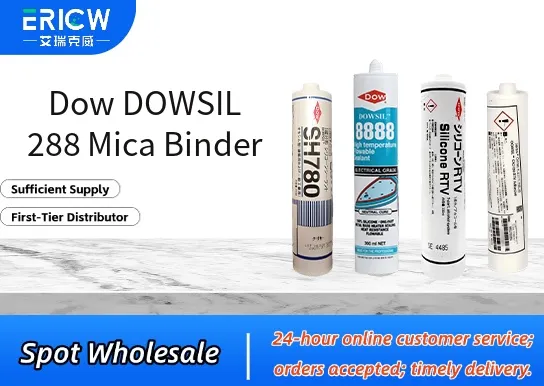
High-performance silicone-based binder specifically engineered for mica flake reinforcement.
Excellent thermal stability, maintaining integrity up to 600 °C in air.
Provides strong adhesion between mica layers without compromising electrical insulation properties.
Low volatility and minimal outgassing—suitable for high-reliability electrical and aerospace applications.
Ready-to-use liquid formulation with consistent viscosity for precise metering and coating processes.
Insulating flexible mica tapes for motor and generator windings.
High-temperature gasketing and sealing components in power electronics.
Thermal barrier substrates in electric vehicle battery modules.
Fire-resistant cable wrapping and busbar insulation systems.
| Chemical Type | Phenyl-modified methylvinylsiloxane polymer |
| Product Form | Clear to pale amber liquid |
| Appearance | Homogeneous, low-viscosity fluid |
| Primary Applications | Mica tape binding, high-temp electrical insulation |
| Key Features | Thermally stable, electrically insulating, low-outgassing |
| Benefits | Enables thin, flexible, high-dielectric-strength mica composites |
| Curing Mechanism | Pt-catalyzed addition cure (heat-activated) |
| Storage Conditions | Store at 5–25 °C in sealed containers; protect from moisture |
Q1: What is the primary function of DOWSIL 288 Mica Binder in mica-based formulations?
A: DOWSIL 288 Mica Binder is a silicone-based binder designed to enhance particle cohesion, improve dispersion stability, and provide thermal and mechanical integrity to mica flakes in high-performance composite systems—particularly in heat-resistant coatings, specialty inks, and functional fillers.
Q2: Is DOWSIL 288 Mica Binder compatible with both solvent-based and solvent-free systems?
A: Yes—it exhibits broad compatibility with common organic solvents, reactive diluents, and many resin systems, including epoxy, polyurethane, and acrylic matrices. It can be incorporated into both solvent-borne and low-VOC or VOC-free formulations, though optimal performance may require minor adjustment of mixing protocols.
Q3: How does DOWSIL 288 affect the rheology and application properties of mica-containing coatings?
A: It imparts mild thixotropic behavior, helping to prevent mica settling during storage while supporting uniform orientation and film formation during application. Viscosity impact is generally moderate and formulation-dependent, allowing for good sprayability, brushability, or roll-coating performance.
Q4: Can DOWSIL 288 Mica Binder withstand elevated processing or service temperatures?
A: Yes—leveraging its silicone backbone, it retains binding functionality and structural stability at elevated temperatures commonly encountered in curing cycles and end-use environments, supporting applications where thermal resilience is critical.
Q5: What is the typical dosage range for effective binding performance?
A: Dosage is formulation-specific but generally ranges from 0.1% to 2% by weight relative to total mica content. Optimal levels depend on flake size distribution, matrix polarity, and desired balance between dispersion stability and final film properties.
Contact With Us:
E-mail: wangxingqiang@ericwchem.com
Have a Questions? Call Us:
Add:
Building A1, Jiete Industrial Park, Huangpu District, Guangzhou City, Guangdong Province, China
 English
 Español
 tiếng việt
 русский