English
 Español
 tiếng việt
 русский
Waterborne coatings, including waterborne wood coatings, use water as the dispersion medium and diluent. Unlike solvent-based coatings that are less commonly used nowadays, their formulation system is more complex. During formulation design, it is necessary not only to focus on the type of polymers and the properties of emulsions and dispersions, but also to select various additives reasonably and consider the mutual influence between components for proper matching. Sometimes, special additives should be selected to meet specific requirements, so as to finally form an applicable formulation.
Waterborne Resin: Serves as the film-forming binder, determining the main functions of the paint film.
Coalescing Agent: Enables emulsion or dispersion particles to form a uniform and dense film after water evaporation, and improves film-forming properties under
low-temperature conditions.
Defoamer and Antifoaming Agent: Inhibits the generation of bubbles in the paint during production, and helps the formed bubbles escape from the liquid surface and break.
Leveling Agent: Improves the application performance of the paint and forms a smooth and glossy coating.
Wetting Agent: Enhances the wetting performance of the paint on the substrate, improves leveling property, and increases the adhesion of the paint film to the substrate.
Dispersant: Promotes the dispersion of pigments and fillers in the paint.
Rheology Modifier: Provides good fluidity and leveling property for the paint, and reduces defects during coating application.
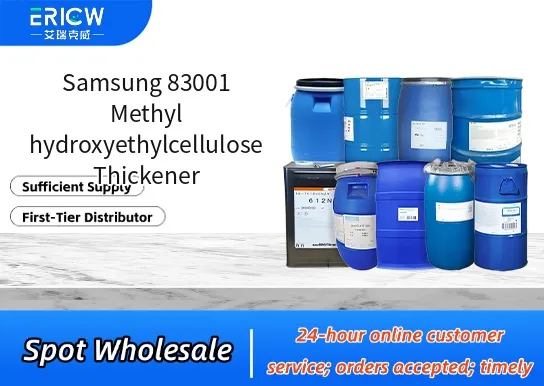
Thickener: Increases the viscosity of the paint, improves the wet film thickness of one-time coating, and prevents sedimentation and delamination of putty and opaque paint.
Preservative: Prevents mold growth of the paint during storage.
Fragrance: Imparts a pleasant odor to the paint.
Colorant: Mainly used for colored paints to give waterborne coatings the desired color. Colorants include two categories: pigments and dyes. Pigments are applied in opaque paints (coating that does not reveal wood grain), while dyes are used in transparent colored paints (coating that reveals wood grain).
Filler: Mainly added to putty and opaque paints to increase solid content and reduce costs.
pH Adjuster: Adjusts the pH value of the paint to maintain its stability.
Wax Emulsion or Wax Powder: Improves the scratch resistance and feel of the paint film.
Special Additives: Auxiliaries added to meet specific requirements of waterborne coatings, such as rust inhibitors (prevent premature rusting of tin can packaging), hardeners (enhance paint film hardness), matting agents (reduce paint film gloss), anti-scratch agents, slip agents (improve paint film feel), anti-blocking agents (prevent coating blocking during stacking), crosslinking agents (used to prepare two-component paints and improve comprehensive performance), water repellents (endow coatings with lotus leaf effect), wear-resistant agents (increase coating wear resistance), and ultraviolet absorbers (improve aging resistance and prevent yellowing of outdoor coatings).
Deionized Water: A small amount of deionized water is often added during formulation design for paint production.
Base Color Paint
Cellulose is the key to forming the gel system and must be added.
Protective colloid helps form the internal "house-of-cards" structure and improves the toughness of multi-color particles.
The viscosity of the base paint affects the particle size formation, and the viscosity at high shear rate (VS) affects the smoothness of the paint film.
Surface activity can effectively form the "house-of-cards" structure, and tetrasodium pyrophosphate (TSPP) functions as viscosity reducer (regarded as structural wetting).
Emulsions with poor compatibility with protective colloid tend to cause particle swelling and poor water resistance of the coating.
Granulation
A proper amount of protective colloid helps form the "house-of-cards" outer shell of particles, avoiding secondary aggregation.
Excessive TSPP will lead to protective colloid precipitation, paint thickening and particle re-aggregation.
Color Matching and Paint Preparation
Emulsions with poor compatibility with protective colloid will cause gelling and pseudoplastic thickening of multi-color coatings.
Thickeners containing strong polar cationic groups are prone to cause post-thickening of multi-color coatings.
Emulsions are beneficial to improving the can-opening effect and facilitating secondary repair.
The Krebs Unit (KU) viscosity of multi-color coatings is generally around 90, and for large particles, it can be adjusted to 100–120 KU.
Waterborne coatings use water as the solvent. As an alternative to solvent-based coating systems, they have gradually gained recognition. In recent years, due to the advantages of ideal waterborne coatings such as no pollution to the human ecological environment, as well as favorable transportation and application performance, such products have been quickly accepted by the market and are regarded as high-tech upgraded products.
The following briefly introduces the key points in the production process and preparation of waterborne coatings:
For formulation materials, pigments and ultra-fine fillers with good dispersibility should be selected as much as possible. On the premise of stably improving product quality, this can eliminate the grinding process, simplify the production process and improve production efficiency.
In the preliminary dispersion stage, an appropriate amount of hydroxyethyl cellulose (HEC) can be added in advance, which not only contributes to dispersion, but also prevents or reduces slurry wall sticking and improves dispersion effect.
Before adding liquid thickeners, they should be diluted with 3–5 times the amount of water as much as possible, and then slowly added under sufficient stirring. This is to prevent emulsion agglomeration or micelle formation caused by excessively high local thickener concentration. Thickeners can be added to the slurry after dispersion and fully stirred to avoid the above problems.
Half of the defoamer is added to the slurry, and the other half is added during the paint mixing process, so as to achieve better defoaming effect. During the paint mixing process, the stirring speed should be controlled at 200–400 r/min to avoid introducing a large number of bubbles during production, which will affect the coating quality.

Vice Chairman of the Coatings and Adhesives Association
Senior New Materials R&D Engineer
Bachelor of Engineering
General Manager
Professional Experience: With 10 years of experience in the fine chemical industry, the team has served over 10,000 clients. Committed to providing one-stop fine chemical services for global clients and helping them optimize the selection of chemical materials.