Features Of Croda Hypermer KD7 Dispersants
Particle Stabilization - Prevents agglomeration and flocculation
Viscosity Control - Improves flow and processing
System Versatility - Works in coatings, inks and composites
Durability - Maintains performance under harsh conditions
Quality Enhancement - Ensures product uniformity
Typical Applications Of Croda Hypermer KD7 Dispersants
Industrial Coatings - For consistent pigment dispersion
Specialty Inks - Enhances color stability and printability
Advanced Composites - Improves filler distribution
Specifications Of Croda Hypermer KD7 Dispersants
Product Name | Hypermer KD7 |
Chemical Type | Cationic polymeric dispersant |
Function | Enhances stability of solvent-based particulate dispersions |
Applications | Carbon, alumina, titanates, carbides, and other inorganic materials in solvent systems |
Physical Form | Solid |
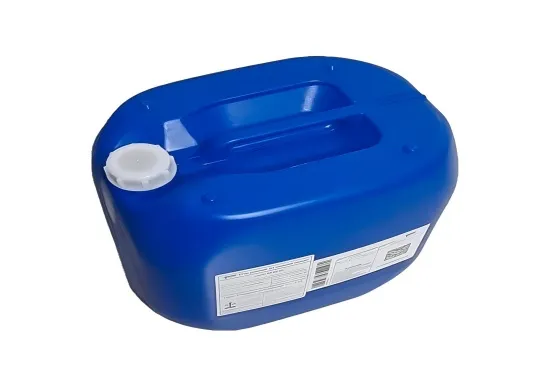
Packaging | 25 kg/barrel |
Origin | United Kingdom |
Key Features | Ash-free burnout during sintering, superior electrostatic |
Croda Hypermer KD7 Dispersants – Frequently Asked Questions (FAQ)
Q1: What types of pigments and fillers is Hypermer KD7 especially effective for?
A: Hypermer KD7 is particularly effective for dispersing high-surface-area inorganic pigments (e.g., carbon black, iron oxides) and functional fillers such as silica, alumina, and calcium carbonate in non-aqueous systems, including solvent-based coatings, inks, and adhesives.
Q2: Is Hypermer KD7 suitable for water-based formulations?
A: No — Hypermer KD7 is specifically designed for non-aqueous, low-to-medium polarity media. It exhibits limited compatibility and performance in aqueous systems; for water-based applications, Croda recommends alternative dispersants from the Hypermer range with hydrophilic architecture.
Q3: How should Hypermer KD7 be incorporated into a formulation?
A: It is typically added during the pigment wetting stage, either neat or pre-diluted in a portion of the carrier solvent. Optimal dispersion is achieved using high-shear mixing or milling; dosage generally ranges from 0.1% to 2% by weight relative to pigment solids, depending on pigment type and target stability requirements.
Q4: Does Hypermer KD7 offer storage stability benefits in finished dispersions?
A: Yes — when properly dosed and processed, Hypermer KD7 helps suppress pigment agglomeration and sedimentation over time, contributing to improved long-term rheological stability and reduced viscosity drift in stored concentrates and end-use formulations.
 English
 Español
 tiếng việt
 русский