English
 Español
 tiếng việt
 русский
Phenolic resins hold a pivotal role in an array of industrial applications due to their excellent material properties and versatility. Understanding the nuances of this synthetic polymer can illuminate its value across various sectors, especially in environments demanding high-performance materials.
This article focuses on the definition and types of phenolic resin, examines its key properties and strengths, explores common industrial uses, and delves into its manufacturing process. For professionals and enthusiasts looking to buy phenolic resin or incorporate it into their production, this comprehensive guide provides invaluable insights.
Phenolic resins are synthetic polymers obtained through the reaction of phenol or substituted phenol with formaldehyde. Two main types of phenolic resins are used in industries: novolac and resole.
Type | Curing Method | Applications |
Novolac | Requires a curing agent | Adhesives, molding compounds |
Resole | Self-curing | Coatings, laminates |
Novolac resins, known for their need for a curing agent, are primarily used in manufacturing adhesives and molding compounds, providing robust and reliable bonding. On the other hand, resole resins are self-curing, making them ideal for coatings and laminates in synthetic resin products where efficiency and ease of application are critical.
For manufacturers planning to buy phenolic resin for large-scale production, understanding the distinction between novolac and resole types is crucial to achieving optimal product performance and cost-effectiveness.
Several key properties make phenolic resins a preferred material in demanding industrial applications. Their remarkable resistance to heat, chemicals, and electricity, along with their mechanical strength and dimensional stability, ensures long-lasting performance.
Property | Benefit |
Heat Resistance | Ideal for high-temperature applications |
Chemical Resistance | Durability in harsh environments |
Mechanical Strength | Structural integrity in demanding uses |
Electrical Insulation | Safety in electrical systems |
These synthetic thermosetting resin characteristics enable phenolic materials to deliver reliability and performance across various industrial sectors. Companies that buy phenolic resin for manufacturing electrical insulation components or high-temperature composites benefit from its exceptional mechanical stability and resistance to degradation.
Phenolic resin's industrial applications span a wide range of sectors, from construction to electronics and automotive manufacturing.
Construction Industry:
Phenolic resins are widely used in producing laminates, coatings, and composite panels that withstand harsh weather and mechanical stress. Their water resistance and durability also make them effective paint additives for mold prevention.
Electronics Industry:
Due to their excellent dielectric strength, phenolic epoxy resin is essential in producing printed circuit boards (PCBs) and electrical housings. When companies buy phenolic resin for electronics manufacturing, they gain a material that ensures safety, reliability, and long service life.
Automotive Sector:
Phenolic resins are used in brake pads, clutch linings, and other heat-resistant parts. They also play a role in lightweight composite structures, often combined with epoxy resin for carbon fiber composites to improve vehicle performance and fuel efficiency.
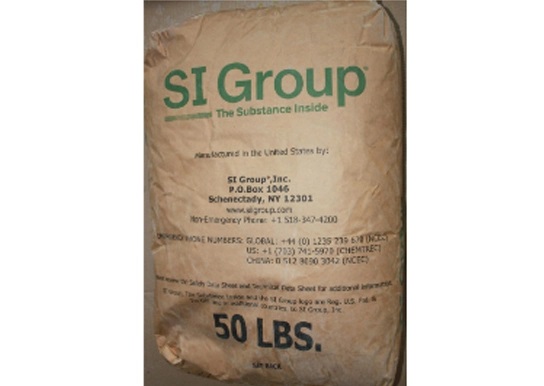
The manufacturing process of phenolic resin begins with the condensation reaction between phenol and formaldehyde under controlled temperature and pH conditions. This ensures the desired molecular weight and mechanical strength of the final product.
After polymerization, curing takes place — novolac resins require a curing agent, whereas resole resins are self-curing. Additives such as carbon black pigment, titanium dioxide, and other fillers are introduced to enhance color, UV resistance, and processability.
Additive | Function |
Carbon Black | Provides coloration and UV protection |
Titanium Dioxide | Improves whiteness and opacity |
Wetting Agent | Enhances resin flow |
Anti-Foaming Agent | Reduces air bubble defects |
Manufacturers who buy phenolic resin in bulk can customize these additives to suit specific industrial needs — from construction materials to high-performance coatings — ensuring consistent quality and optimized product characteristics.
Phenolic resins combine durability, strength, and stability, making them invaluable in countless industrial applications. Their resistance to heat, chemicals, and electricity makes them ideal for sectors requiring high-performance materials. For engineers, researchers, or business owners seeking to buy phenolic resin and integrate it into advanced formulations, understanding its types, processing, and limitations is essential to achieving superior results.
Whether your focus is on enhancing electrical insulation, improving composite strength, or navigating raw material costs like titanium dioxide and carbon black, phenolic resins continue to drive innovation in modern material science. Investing in the right formulation when you buy phenolic resin can help your business achieve long-term efficiency, performance, and sustainability.

Vice Chairman of the Coatings and Adhesives Association
Senior New Materials R&D Engineer
Bachelor of Engineering
General Manager
Professional Experience: With 10 years of experience in the fine chemical industry, the team has served over 10,000 clients. Committed to providing one-stop fine chemical services for global clients and helping them optimize the selection of chemical materials.