English
 Español
 tiếng việt
 русский
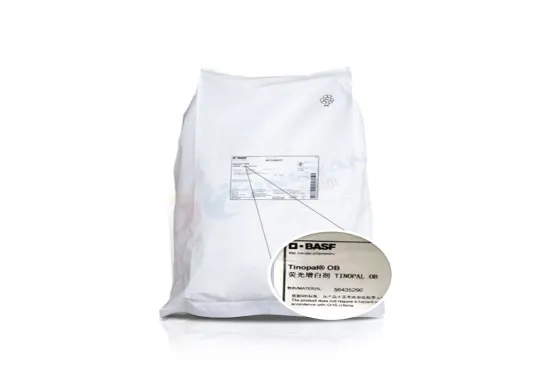
Clariant Hostastat FE 2 is a fatty acid ester-based antistatic agent, presenting as a near-white liquid. It is specifically formulated for polyolefins, providing reliable antistatic performance to balance and reduce static charge on polyolefin surfaces. With well-controlled physical and chemical properties (such as low acid value and stable color), it integrates easily into polyolefin processing, meeting the basic antistatic needs of polyolefin-based plastic products.
Targeted Compatibility: Specifically formulated for polyolefins, ensuring efficient antistatic performance in polyolefin - based systems.
Stable Properties: Low acid value (≈5mgKOH/g) and stable color (≤3) guarantee consistent product quality.
Easy Processing: Liquid form with suitable density/volume density, enabling convenient handling, transportation, and uniform mixing during processing.
Reliable Efficiency: Saponification value of approximately 170mgKOH/g ensures stable long - term antistatic functionality.
Polyolefin plastics: Acts as a core antistatic additive to inhibit static charge accumulation.
Polyolefin processing: Seamlessly integrates into production workflows due to liquid form and density compatibility.
Polyolefin - based products: Prevents static - related issues such as dust adsorption on product surfaces.
General polyolefin applications: Meets the basic long - term antistatic requirements of various polyolefin processing and product scenarios.
Product Name | Clariant Hostastat FE 2 |
Chemical Composition | Fatty acid ester |
Appearance | Near-white liquid |
Drop Point | Approximately 60℃ |
Acid Value | Approximately 5 mgKOH/g |
Saponification Value | Approximately 170 mgKOH/g |
Color | ≤ 3 |
Density (23℃) | Approximately 1.02 g/cm³ |
Bulk Density | Approximately 500 g/L |
Q1: What types of polymers is Hostastat FE 2 compatible with?
A: Hostastat FE 2 is primarily designed for use in polyolefins such as PP and HDPE, and has demonstrated good compatibility in engineering thermoplastics including ABS and PS. It is not recommended for highly polar or hydrolytically sensitive resins without prior compatibility testing.
Q2: How is Hostastat FE 2 typically incorporated into polymer formulations?
A: It is commonly added during compounding via twin-screw extrusion or dry-blended with polymer granules prior to injection molding or extrusion. Due to its solid, free-flowing powder form, it offers excellent handling and dispersion characteristics without requiring pre-dilution.
Q3: Does Hostastat FE 2 provide permanent antistatic performance?
A: It delivers long-lasting, bloom-controlled antistatic functionality—particularly effective in applications where surface resistivity needs to be maintained over extended periods under ambient conditions. Performance longevity depends on processing parameters, polymer matrix, and end-use environmental exposure.
Q4: Is Hostastat FE 2 suitable for food-contact applications?
A: Hostastat FE 2 is not intended for direct food-contact applications unless explicitly approved by relevant regulatory authorities and validated through full compliance testing. Customers must verify suitability against applicable regional food-contact regulations before use.
Contact With Us:
E-mail: wangxingqiang@ericwchem.com
Have a Questions? Call Us:
Add:
Building A1, Jiete Industrial Park, Huangpu District, Guangzhou City, Guangdong Province, China