English
 Español
 tiếng việt
 русский
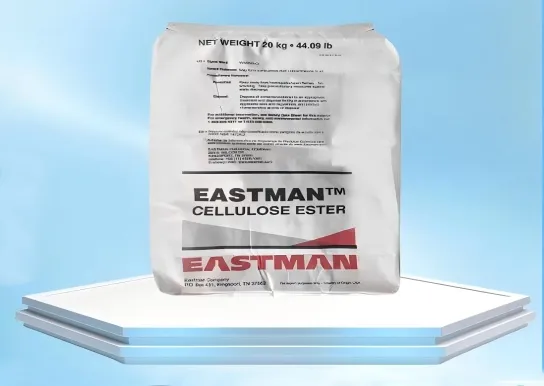
Eastman CA-320S NF/EP is a high-quality pharm-grade granular excipient of cellulose acetate series, custom-designed for osmotic controlled-release drug delivery, drug taste masking and pharmaceutical formulation modification. Manufactured strictly in line with cGMP standards
Dual Pharmacopoeia Compliance - Meets NF/EP standards, manufactured under cGMP, pharm-grade quality guaranteed
Low Acetyl & High Hydroxyl - Low acetyl and high hydroxyl content, suitable for preparing drug controlled-release membranes
Precise Controlled-Release - Regulates drug release rate, achieves long-acting and stable drug delivery, enhances efficacy
Efficient Drug Taste Masking - Effectively masks unpleasant drug odors, improving patient medication compliance
Easy Granular Processing - Good fluidity of granular form, easy to disperse and prepare, convenient for formulation processing
Osmotic Controlled-Release Formulations - Used as membrane material for osmotic pump controlled-release formulations to precisely regulate drug release rhythm
Drug Taste Masking Coating - Used for coating oral drug particles/tablets to mask bitter and other unpleasant odors
Sustained-Release Microcapsule Matrix - Used as matrix for drug microcapsule preparation to prolong drug action time
Pharmaceutical Membrane Preparation - Used for preparing pharmaceutical sustained-release membranes and isolation membranes to improve formulation stability
| Brand | Eastman |
| Chemical Type | Cellulose Acetate (CA),low acetyl and high hydroxyl content |
| Physical Form | Granular |
| Core Characteristics | Dual pharmacopoeia compliance,Low acetyl & high hydroxyl,Precise controlled-release |
| Production Standard | cGMP (Current Good Manufacturing Practices) |
| Pharmacopoeia Standard | Meets National Formulary (NF) andEuropean Pharmacopoeia (EP) requirements |
| Solubility | Easily soluble in organic solventssuch as acetone and ethyl acetate |
Q1: What are the key regulatory designations for Eastman CA-320S NF/EP?
A: Eastman CA-320S NF/EP is compliant with the United States Pharmacopeia (USP) and European Pharmacopoeia (Ph. Eur.) monographs for Cellulose Acetate Butyrate, and is designated as NF (National Formulary) and EP (European Pharmacopoeia) grade—indicating suitability for pharmaceutical and medical device applications where compendial compliance is required.
Q2: How does CA-320S NF/EP differ from standard cellulose acetate butyrate grades?
A: CA-320S NF/EP is specifically purified and controlled to meet stringent pharmacopoeial requirements for residual solvents, heavy metals, and microbial limits. It also features a consistent molecular weight distribution and optimized butyryl/acetyl substitution ratio to support reproducible film formation and compatibility in sensitive formulations such as oral solid dosage coatings and medical device binders.
Q3: In which types of pharmaceutical formulations is CA-320S NF/EP most commonly used?
A: It is widely employed as a functional film-coating polymer for immediate- and modified-release tablets and capsules, and as a binder or matrix former in hot-melt extrusion and direct compression applications. Its balanced solubility profile supports use in both organic and aqueous-based coating systems.
Q4: Is CA-320S NF/EP compatible with common plasticizers used in pharmaceutical film coatings?
A: Yes—it demonstrates good compatibility with widely accepted pharmaceutical plasticizers such as triethyl citrate, acetyl tributyl citrate, and polyethylene glycol, enabling formulation flexibility while maintaining film integrity and mechanical performance across storage conditions.
Q5: What handling precautions should be observed during processing?
A: As with other hygroscopic polymers, CA-320S NF/EP should be stored under dry conditions and may benefit from pre-drying prior to high-shear processing or solvent-based operations. Avoid prolonged exposure to high humidity to prevent viscosity variability or agglomeration during dissolution or dispersion.
Contact With Us:
E-mail: wangxingqiang@ericwchem.com
Have a Questions? Call Us:
Add:
Building A1, Jiete Industrial Park, Huangpu District, Guangzhou City, Guangdong Province, China