English
 Español
 tiếng việt
 русский
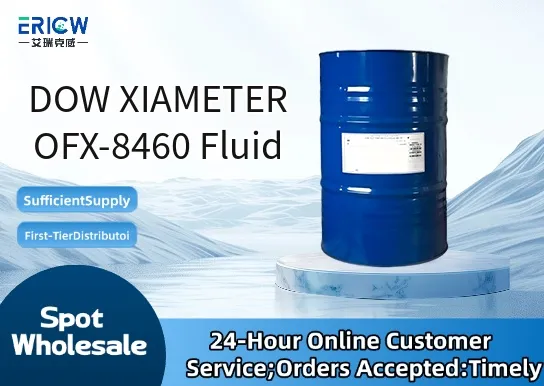
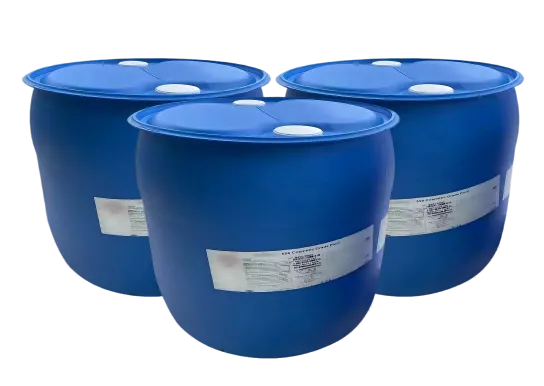
Dow DOWSIL 2188 Softener is a high-performance polyether-modified silicone softener in the DOWSIL series, designed for soft finishing and care scenarios of various fiber fabrics. It features broad-spectrum fiber compatibility and excellent softening and smoothness effects, endowing fabrics with fluffy texture and hydrophilic properties
Broad-Spectrum Fiber Compatibility - Suitable for synthetic fibers such as polyester and nylon, and blended fabrics
Softening & Smoothing Enhancement - Endows fabrics with soft and smooth hand feel, improving wearing comfort
Stable Process Compatibility - Stable in PH 3-10 range, suitable for dipping and padding processes
High-Temperature Yellowing Resistance - No yellowing in high-temperature finishing, suitable for light-colored and sensitive-colored fabrics
Laundry Care Field - Formulas of fabric softeners and care liquids, improving fabric softness
Textile Finishing Field - Soft finishing of polyester, nylon and blended fabrics
Home Textile Care Field - Soft and fluffy treatment of beddings, towels and other home textile products
Garment Processing Field - Post-finishing of light-colored/sensitive-colored garments, maintaining pure color
| Chemical Composition | Polyether-Modified Silicone |
| Appearance | Transparent Liquid |
| Viscosity (25℃) | 5500 Centistokes |
| Refractive Index (25℃) | 1.432 |
| Applicable pH Range | 3 - 10 |
| Shelf Life | 720 Days |
| Core Efficacy | Softening, Smoothing, Fluffing, Hydrophilic |
Q1: What is the primary functional role of DOWSIL 2188 Silicone Oil in formulations?
A: DOWSIL 2188 is a medium-viscosity, dimethyl silicone fluid designed primarily as a surface modifier and lubricity enhancer. It imparts smoothness, slip, and reduced coefficient of friction to coatings, personal care emulsions, and industrial release systems without significantly affecting film integrity or drying behavior.
Q2: Is DOWSIL 2188 compatible with common water-based and solvent-based systems?
A: Yes — DOWSIL 2188 exhibits broad compatibility with both aqueous polymer dispersions (e.g., acrylics, vinyl acetate copolymers) and organic solvent-based resins (e.g., alkyds, polyurethanes, nitrocellulose). It can be incorporated directly or via pre-dilution, though optimal dispersion may require mild mechanical agitation depending on formulation viscosity.
Q3: How does DOWSIL 2188 differ from lower- and higher-viscosity silicone oils in performance applications?
A: Its balanced viscosity offers improved handling versus low-viscosity fluids (e.g., DOWSIL 200 Fluid 0.65 cSt), providing better film persistence and reduced volatility, while remaining more readily dispersible than high-viscosity grades (e.g., DOWSIL 200 Fluid 1000 cSt), which can hinder uniform distribution in shear-sensitive systems.
Q4: Can DOWSIL 2188 be used in applications requiring FDA compliance for indirect food contact?
A: DOWSIL 2188 is manufactured under Dow’s quality systems and is suitable for use in certain indirect food-contact applications where permitted by applicable regulatory frameworks — however, final compliance depends on the full formulation, processing conditions, and end-use scenario. Users must conduct their own regulatory assessment and verify suitability with current regional requirements.
Contact With Us:
E-mail: wangxingqiang@ericwchem.com
Have a Questions? Call Us:
Add:
Building A1, Jiete Industrial Park, Huangpu District, Guangzhou City, Guangdong Province, China