English
 Español
 tiếng việt
 русский
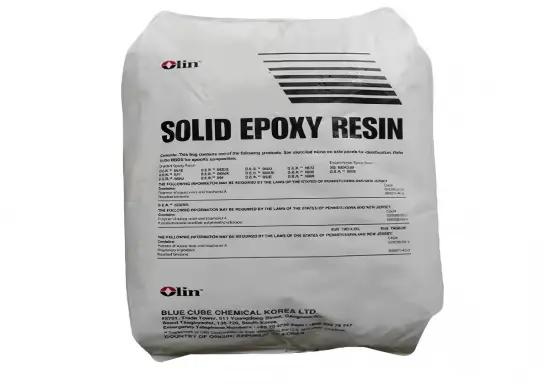
The DOW Solid Epoxy Resin series combines tailored molecular architectures with multifunctional reactivity to address demanding industrial requirements. Built on bisphenol A or phenolic novolac backbones, the resins feature adjustable epoxy equivalent weights (EEW) ranging from 172 to 2100 g/eq, enabling precise control over crosslinking density and cured network properties.
High-EEW variants exhibit extended chain lengths for enhanced flexibility, while low-EEW grades maximize epoxy group concentration to achieve rigid, chemically resistant thermosets.
Post-cure, the resins form densely crosslinked networks with high glass transition temperatures (Tg), delivering mechanical strength, dimensional stability, and resistance to acids, solvents, and thermal degradation.
Versatile Curing Performance: Compatible with various curing agents (amines, anhydrides, phenolic) to form highly cross-linked 3D networks with excellent mechanical strength.
Exceptional Thermal Stability: High glass transition temperature (Tg 150-160°C) maintains performance in high-temperature applications.
Superior Chemical Resistance: Resistant to water, acids, alkalis and organic solvents, ideal for harsh environments.
Excellent Electrical Properties: Provides reliable insulation for high-temperature electrical components with outstanding dielectric characteristics.
Optimized Processing Characteristics: Balanced viscosity and flow properties enable easy application in coatings, composites and adhesives.
Electrical Insulation: Transformers, motors and high-power PCBs requiring thermal and electrical protection.
High-Performance Composites: Aerospace, automotive and sports equipment utilizing carbon fiber reinforcement.
Industrial Coatings: Decorative powder coatings and corrosion-resistant finishes for metal surfaces.
Chemical Equipment: Storage tanks, pipelines and reactors demanding chemical resistance.
| Model | Epoxy Equivalent Weight (g/eq) | Softening Point (°C) | Color (Gardner) | Total Chloride (%) |
| DER671 | 875–975 | 85–95 | ≤2 | ≤0.3 |
| DER669E | 2300–2900 | 125–135 | ≤2 | ≤0.3 |
| DER669-20 | 2700–3300 | 135–145 | ≤2 | ≤0.3 |
| DER667-20 | 1750–2100 | 104–110 | ≤2 | ≤0.3 |
| DER664UE | 860–930 | 104–110 | ≤1 | ≤0.3 |
| DER663UE | 675–760 | 95–105 | ≤2 | ≤0.3 |
| DER663U | 730–820 | 92–102 | ≤2 | ≤0.3 |
| DER662E | 450–500 | 64–74 | ≤2 | ≤0.3 |
| DER6508 | 172–176 | / | ≤1 | ≤0.3 |
Q1: What are the primary processing methods for DOW Solid Epoxy Resin?
A: DOW Solid Epoxy Resin is typically processed using conventional thermoset techniques including melt blending, extrusion, compression molding, and transfer molding. Its solid form and controlled particle size facilitate uniform dispersion in thermoplastic or thermoset matrices during compounding.
Q2: How does this resin perform under elevated temperature conditions?
A: DOW Solid Epoxy Resin exhibits good thermal stability prior to cure and forms highly crosslinked networks upon proper thermal curing. The cured material demonstrates enhanced heat resistance, dimensional stability, and retention of mechanical properties at elevated service temperatures typical of engineering thermosets.
Q3: Is it compatible with common epoxy hardeners and accelerators?
A: Yes — DOW Solid Epoxy Resin is designed to react efficiently with a broad range of amine, anhydride, and phenolic hardeners, as well as catalytic systems commonly used in industrial epoxy formulations. Cure kinetics and final properties can be tailored by selecting appropriate hardener type and stoichiometry.
Q4: Can it be used in applications requiring electrical insulation?
A: Yes — when fully cured, DOW Solid Epoxy Resin delivers excellent dielectric strength, low dielectric loss, and high volume resistivity, making it suitable for electrical encapsulation, potting, and insulating coatings in demanding environments.
Contact With Us:
E-mail: wangxingqiang@ericwchem.com
Have a Questions? Call Us:
Add:
Building A1, Jiete Industrial Park, Huangpu District, Guangzhou City, Guangdong Province, China