English
 Español
 tiếng việt
 русский
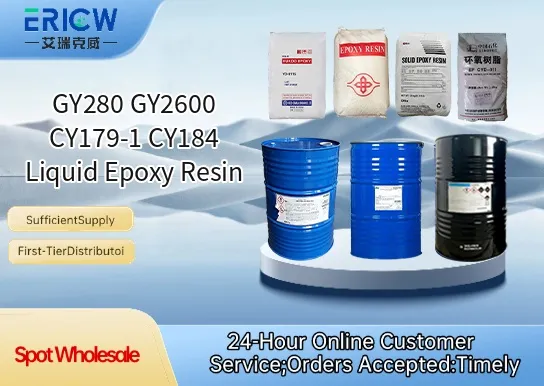
Low viscosity for excellent flow and wetting in demanding casting and impregnation processes.
High purity with low chloride content, ensuring superior electrical insulation performance.
Excellent compatibility with common amine and anhydride curing agents for flexible formulation design.
Good thermal stability and mechanical strength retention after post-cure.
Consistent batch-to-batch reproducibility meeting strict industrial quality control standards.
Electrical encapsulation of transformers, reactors, and high-voltage insulators.
Structural adhesives for aerospace composite bonding and automotive lightweight assemblies.
Matrix resin for fiber-reinforced laminates in wind turbine blades and marine composites.
Underfill and glob-top encapsulants in semiconductor packaging and PCB protection.
High-performance coatings for corrosion-resistant linings in chemical processing equipment.
| Chemical Type | Bisphenol-A based liquid epoxy resin |
| Product Form | Clear to pale yellow viscous liquid |
| Appearance | Homogeneous, transparent, free from gel particles or sediment |
| Epoxy Equivalent Weight (EEW) | 184–190 g/eq (typical average: 187 g/eq) |
| Viscosity at 25°C | 12,000–16,000 mPa·s |
| Chloride Content | ≤ 800 ppm |
| Softening Point | Not applicable (liquid at room temperature) |
| Primary Applications | Electrical insulation, structural composites, protective coatings, adhesive systems |
Q1: What are the key differences between GY280, GY2600, CY179-1, and CY184 in terms of molecular weight and reactivity?
A: GY280 and GY2600 are standard bisphenol-A based liquid epoxy resins with medium to high epoxide equivalent weights, offering balanced viscosity and cure response. CY179-1 and CY184 are specialty liquid resins designed for enhanced flexibility and reduced brittleness—CY179-1 features a modified backbone for improved adhesion to challenging substrates, while CY184 delivers lower viscosity and faster initial cure kinetics under ambient or mild thermal conditions.
Q2: Are these resins compatible with common amine, anhydride, and catalytic hardeners?
A: Yes—all four resins exhibit broad compatibility with aliphatic and cycloaliphatic amines, aromatic amines, carboxylic anhydrides, and tertiary amine or imidazole catalysts. Selection of hardener depends on the target performance profile—e.g., amine systems for room-temperature structural bonding, anhydrides for elevated-temperature electrical encapsulation, and catalytic systems for low-exotherm potting applications.
Q3: How should these resins be stored to maintain stability and shelf life?
A: Store unopened containers in a cool, dry place away from direct sunlight and sources of heat or moisture. Once opened, minimize exposure to humidity and atmospheric CO₂, as prolonged contact may lead to surface skinning or viscosity increase. Under recommended storage conditions, typical shelf life is 12 months from date of manufacture.
Q4: Can these resins be blended with each other or with other epoxy types to tailor formulation properties?
A: Yes—blending GY280, GY2600, CY179-1, and CY184 is commonly practiced to fine-tune viscosity, flexibility, glass transition temperature, and chemical resistance. They are also miscible with many reactive diluents, polymeric modifiers, and other liquid or solid epoxy resins, though compatibility testing is recommended for critical applications involving extended service life or regulatory compliance.
Contact With Us:
E-mail: wangxingqiang@ericwchem.com
Have a Questions? Call Us:
Add:
Building A1, Jiete Industrial Park, Huangpu District, Guangzhou City, Guangdong Province, China