English
 Español
 tiếng việt
 русский
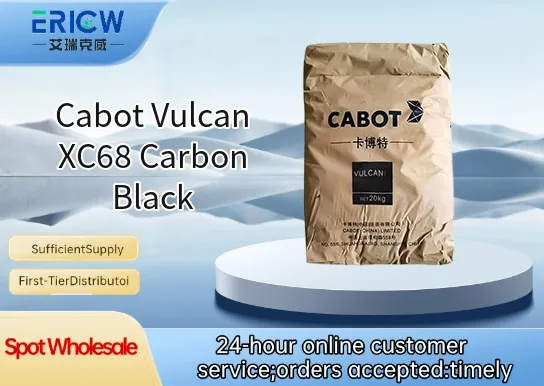
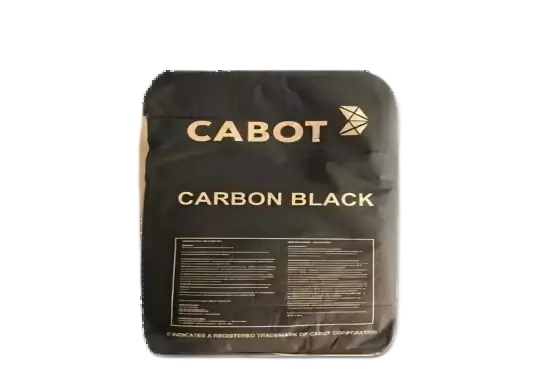
Cabot VULCAN Carbon Black Series represents a diversified portfolio of engineered carbon blacks optimized for performance-critical elastomer systems. Combining tailored particle architecture with controlled surface functionality, these grades deliver precision reinforcement across tire treads, industrial rubber goods, and conductive polymer applications.
Enhance tensile strength and abrasion resistance in dynamic environments while balancing hysteresis for energy-efficient formulations. Advanced surface engineering ensures rapid dispersion in solvent/water-based systems, supporting high-throughput processing across coatings, inks, and cable shielding applications.
Electrically conductive variants feature ultra-low ash (<0.1%) and ionic impurities, enabling stable resistivity control in ESD-sensitive components and semiconductor layers.
High reinforcement properties for superior tensile strength and abrasion resistance
Excellent conductivity for ESD and semiconductor shielding applications
Optimized particle structure for balanced processability and performance
High purity with low ash, sulfur and ionic impurities for reliable long-term use
Consistent batch-to-batch quality with precise conductivity control
Rubber reinforcement for tires and industrial rubber goods
Conductive compounds for ESD protection and cable shielding
High-performance coatings and inks requiring deep black pigmentation
Specialty plastics and masterbatches for technical applications
| Model | Iodine Adsorption Value (mg/g) | Oil Absorption Number (cc/100g) | DBP Oil Absorption (cc/100g) |
| VULCAN 10 | 450 (ASTM D-1510) | 175 (ASTM D-2414) | 174/192 |
| VULCAN 9H | 95-105 (ASTM D1510) | 175 (ASTM D-2414) | 174/192 |
| VULCAN XCmax22 | 450 (ASTM D-1510) | 175 (ASTM D-2414) | 174/192 |
| VULCAN M | 450 (ASTM D-1510) | 175 (ASTM D-2414) | 174/192 |
| VULCAN XC200 | 95-105 (ASTM D1510) | 99 | 99 |
| VULCAN XC605 | 450 (ASTM D-1510) | 99 | 99 |
| VULCAN XC60 | 95-105 (ASTM D1510) | 99 | 99 |
| VULCAN 1345 | 95-105 (ASTM D1510) | 85-95 (ASTM D2414) | 85-95 |
| VULCAN 9A32 | 450 (ASTM D-1510) | 175 (ASTM D-2414) | 99 |
Q1: What is the primary application of VULCAN carbon black?
A: VULCAN is a high-surface-area furnace black primarily used as a reinforcing filler and conductive agent in rubber compounds—especially for high-performance tires, industrial rubber goods, and specialty elastomer applications requiring enhanced tensile strength, abrasion resistance, and electrical conductivity.
Q2: How does VULCAN differ from other Cabot carbon blacks like N110 or N330?
A: VULCAN (historically designated N110) has one of the highest surface areas among standard furnace blacks, resulting in superior reinforcement and faster cure rates in rubber. Compared to higher-structure grades like N330, it offers finer particle size and greater dispersion sensitivity—but delivers higher modulus and improved wear performance in demanding dynamic applications.
Q3: Is VULCAN suitable for non-rubber applications such as inks or coatings?
A: While optimized for rubber reinforcement, VULCAN is occasionally used in conductive inks, battery electrodes, and specialty coatings where high surface area and strong pigment strength are beneficial. However, its dispersibility and surface chemistry may require formulation adjustments compared to grades specifically designed for liquid systems.
Q4: What are key handling and safety considerations when processing VULCAN?
A: As with all carbon blacks, airborne dust should be controlled during handling to minimize inhalation exposure. Use local exhaust ventilation and appropriate respiratory protection where dust concentrations may exceed occupational exposure limits. VULCAN is not classified as hazardous under GHS for acute toxicity, but good industrial hygiene practices—including avoiding skin contact and preventing environmental release—are strongly recommended.
Q5: How should VULCAN be stored to maintain optimal performance?
A: Store in a cool, dry location, protected from moisture, direct sunlight, and contamination. Keep bags sealed until use to prevent agglomeration and adsorption of atmospheric moisture or volatiles, which could affect dispersion efficiency and compound consistency.
Contact With Us:
E-mail: wangxingqiang@ericwchem.com
Have a Questions? Call Us:
Add:
Building A1, Jiete Industrial Park, Huangpu District, Guangzhou City, Guangdong Province, China