English
 Español
 tiếng việt
 русский
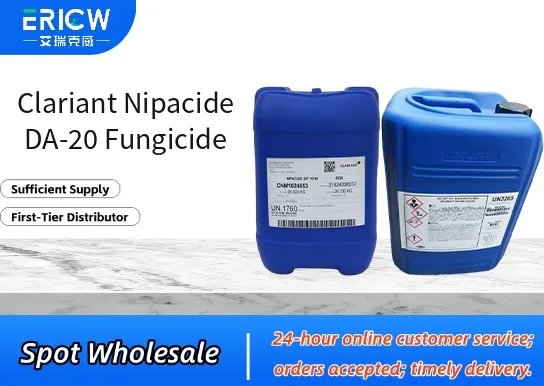
Clariant Nipacide IPBC 10 is a water-based dry-film biocide from Nipacide series, based on Iodopropylbutylcarbamate (IPBC). Broad-spectrum anti-fungal and anti-algal, carbendazim-free, designed for long-term dry-film protection of coatings and wood products.
Broad-spectrum anti-fungal & algal – High activity against various fungi and algae
Carbendazim-free – Safe formula for high-compliance scenarios
High-temperature stable – Stable performance within 40℃, suitable for normal processes
Non-leachable – No migration after dry film formation, longer protection
Water-based adaptable – Dispersion form, compatible with water-based and solvent-based system
Water-based & solvent-based coatings
Wood coatings & wood protection
Packaging protection systems
Aqueous color pastes & coatings
Wood processing auxiliary systems
| Brand | Clariant |
| Product Type | Dry-film biocide |
| Active Ingredient | Iodopropylbutylcarbamate (IPBC) |
| Active Content | approx. 10% |
| Form | Dispersion |
| pH Stability | 4–10 |
| Temperature Stability | ≤40℃ |
| Recommended Dosage | 0.5–2.0% |
Q1: What is the primary mode of action of Nipacide IPBC 10?
A: Nipacide IPBC 10 functions as a broad-spectrum fungistatic agent, primarily inhibiting fungal cell wall synthesis and disrupting membrane integrity. Its active ingredient, 3-iodo-2-propynyl butylcarbamate (IPBC), targets key enzymatic processes in molds, yeasts, and filamentous fungi.
Q2: In which types of industrial formulations is Nipacide IPBC 10 commonly used?
A: It is widely incorporated into water-based coatings, adhesives, sealants, construction chemicals, and architectural paints—particularly where long-term protection against wet-film and dry-film fungal growth is required under humid or tropical conditions.
Q3: Is Nipacide IPBC 10 compatible with other common biocides?
A: Yes, Nipacide IPBC 10 demonstrates good compatibility with many isothiazolinones, benzisothiazolinones, and formaldehyde releasers, enabling synergistic combinations for enhanced spectrum and stability—though compatibility testing under actual formulation conditions is always recommended.
Q4: How should Nipacide IPBC 10 be dosed in a typical formulation?
A: Dosage depends on formulation pH, temperature exposure, water activity, and expected microbial challenge, but it is typically used at low concentrations—generally ranging from 0.1% to 2% by weight of the final product—to achieve effective preservation without compromising performance or stability.
Contact With Us:
E-mail: wangxingqiang@ericwchem.com
Have a Questions? Call Us:
Add:
Building A1, Jiete Industrial Park, Huangpu District, Guangzhou City, Guangdong Province, China