English
 Español
 tiếng việt
 русский
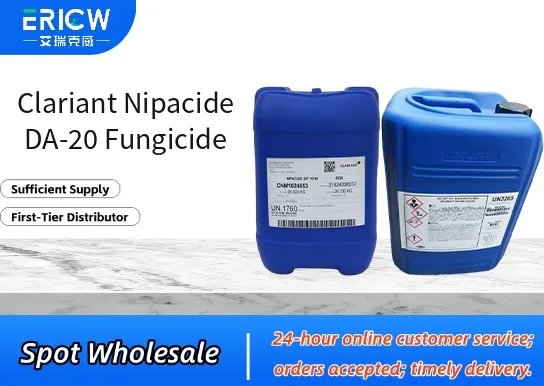
Broad-spectrum fungicidal activity against Aspergillus, Penicillium, and Cladosporium species.
Non-volatile and low-odor formulation suitable for sensitive indoor environments.
Excellent compatibility with water-based acrylic, vinyl acetate, and styrene-butadiene polymer systems.
Persistent protection without compromising polymer integrity or film clarity.
REACH-compliant and registered under EU Biocidal Products Regulation (BPR) for product-type 6 (preservatives).
Latex paints and architectural coatings.
Wallpapers and decorative wall finishes.
Emulsion-based adhesives and construction sealants.
Textile and nonwoven fabric treatments for interior applications.
Wood preservative formulations for interior-grade engineered wood products.
| Chemical Type | Isothiazolinone-based blend (active: 2-methyl-4-isothiazolin-3-one and 5-chloro-2-methyl-4-isothiazolin-3-one) |
| Product Form | Aqueous solution |
| Appearance | Clear, pale yellow liquid |
| pH (1% aqueous solution) | 3.0–5.0 |
| Density (20 °C) | 1.08–1.12 g/cm³ |
| Solubility | Completely miscible with water and common polar organic solvents |
| Primary Applications | Preservation of water-based polymer dispersions and coatings |
| Key Features | Low volatility, thermal stability up to 60 °C, and hydrolytic stability in neutral to mildly acidic systems |
Q1: What is the primary mode of action of Nipacide DA-20?
A: Nipacide DA-20 functions as a broad-spectrum fungicide through inhibition of key enzymatic processes essential for fungal cell growth and reproduction. Its active ingredient disrupts membrane integrity and metabolic pathways in susceptible microorganisms, providing reliable protection against mold, yeast, and filamentous fungi.
Q2: In which types of industrial formulations is Nipacide DA-20 commonly used?
A: It is widely applied in water-based industrial systems including metalworking fluids, latex paints, adhesives, coatings, and polymer emulsions—particularly where long-term microbial stability and resistance to spoilage are critical during storage and use.
Q3: How stable is Nipacide DA-20 under typical processing conditions?
A: Nipacide DA-20 demonstrates good thermal and pH stability across a broad range, maintaining efficacy in formulations with pH values between approximately 4 and 10 and during standard mixing, homogenization, and storage conditions encountered in industrial manufacturing.
Q4: Is Nipacide DA-20 compatible with common biocides and formulation additives?
A: Yes, it generally shows good compatibility with other preservatives such as isothiazolinones and formaldehyde donors, as well as with surfactants, thickeners, and defoamers typically found in industrial formulations—though compatibility testing under actual use conditions is recommended prior to full-scale implementation.
Q5: What is the typical dosage range for effective fungal control?
A: Effective dosage depends on the specific formulation, microbial challenge, and regulatory environment, but Nipacide DA-20 is typically used at low concentrations—generally ranging from 0.1% to 2% by weight—based on comprehensive laboratory and field performance evaluation.
Contact With Us:
E-mail: wangxingqiang@ericwchem.com
Have a Questions? Call Us:
Add:
Building A1, Jiete Industrial Park, Huangpu District, Guangzhou City, Guangdong Province, China