English
 Español
 tiếng việt
 русский
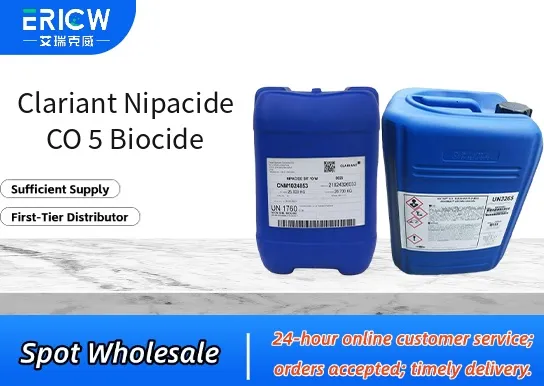
Highly effective broad-spectrum biocide against bacteria, fungi, and algae in water-based systems.
Stable across a wide pH range (pH 4–10), ensuring consistent performance in diverse process conditions.
Low odor and favorable toxicological profile, supporting safer handling and regulatory compliance (e.g., EPA registered, EU BPR compliant).
Compatible with common industrial additives including surfactants, thickeners, and corrosion inhibitors.
Non-oxidizing chemistry minimizes corrosion risk to metal components and avoids interference with redox-sensitive processes.
Preservation of water-based paints and coatings during storage and application.
Microbial control in pigment dispersions and colorant concentrates.
Protection of architectural and industrial latex emulsions against spoilage.
Biostabilization of adhesives, sealants, and construction chemicals.
In-process preservation of water-miscible metalworking fluids (MWFs) and cleaning formulations.
| Chemical Type | Isothiazolinone-based biocide (mixture of 5-chloro-2-methyl-4-isothiazolin-3-one and 2-methyl-4-isothiazolin-3-one) |
| Product Form | Aqueous solution |
| Appearance | Clear, pale yellow liquid |
| pH (1% aqueous solution) | 2.0 – 4.0 |
| Density (20 °C) | 1.05 – 1.10 g/cm³ |
| Solubility | Completely miscible with water |
| Primary Applications | Preservation of water-based industrial formulations |
| Key Features | Broad-spectrum efficacy, low use concentration, thermal and hydrolytic stability |
Q1: What is the primary mode of action of Nipacide CO 5 Biocide?
A: Nipacide CO 5 Biocide functions as a broad-spectrum antimicrobial agent primarily through disruption of microbial cell membranes and interference with essential metabolic processes, leading to rapid biostatic and biocidal effects against bacteria, yeasts, and molds.
Q2: In which types of industrial formulations is Nipacide CO 5 typically used?
A: It is commonly incorporated into water-based industrial products such as metalworking fluids, latex paints and coatings, adhesives, construction chemicals, and cleaning concentrates—especially where long-term preservation against microbial spoilage is required under challenging pH and temperature conditions.
Q3: Is Nipacide CO 5 compatible with common formulation ingredients?
A: Yes, it demonstrates good compatibility with anionic, nonionic, and amphoteric surfactants, thickeners, defoamers, and many common co-biocides. Compatibility testing under actual formulation conditions is recommended to confirm stability and efficacy.
Q4: How should Nipacide CO 5 be dosed in formulations?
A: Dosage depends on formulation requirements, challenge level, and regulatory considerations, but it is typically used at low concentrations—generally ranging from 0.1% to 2% by weight—to achieve effective preservation without compromising product performance.
Q5: Does Nipacide CO 5 require special handling or storage conditions?
A: It should be stored in its original sealed container at room temperature, away from direct sunlight and strong oxidizing agents. Standard industrial hygiene practices apply during handling—gloves and eye protection are recommended to minimize skin or eye contact.
Contact With Us:
E-mail: wangxingqiang@ericwchem.com
Have a Questions? Call Us:
Add:
Building A1, Jiete Industrial Park, Huangpu District, Guangzhou City, Guangdong Province, China