English
 Español
 tiếng việt
 русский
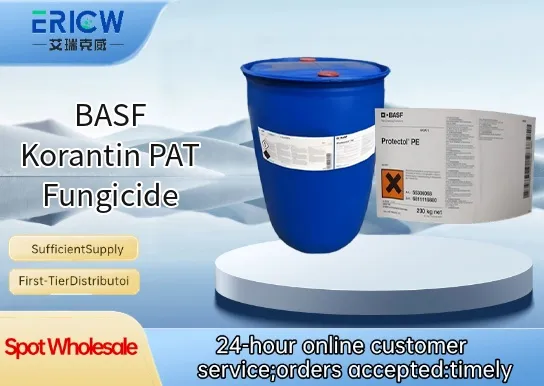
Proprietary multi-site contact fungicidal action with rapid knockdown of target pathogens.
Excellent rainfastness and UV stability for extended residual protection under field conditions.
Low phytotoxicity profile, enabling safe use on sensitive crops during critical growth stages.
Compatible with major adjuvants and commonly used insecticides and herbicides in integrated pest management programs.
Non-systemic mode of action minimizes risk of resistance development in fungal populations.
Fruit orchards — including apple, pear, and stone fruit for control of scab and powdery mildew.
Vineyards — effective against downy and powdery mildew on grapevines.
Leafy vegetables — registered for use on lettuce, spinach, and brassicas to manage leaf spot diseases.
Protected horticulture — suitable for greenhouse tomato and cucumber production under high-humidity conditions.
Ornamental nurseries — provides preventive and curative control of foliar fungal diseases on bedding plants and shrubs.
| Chemical Type | Multi-site contact fungicide (based on proprietary PAT technology) |
| Product Form | Water-dispersible granule (WDG) |
| Appearance | Off-white to light beige free-flowing granules |
| Primary Applications | Foliar spray for preventive and early-curative disease control |
| Key Features | Rainfast within 2 hours; photostable; non-systemic; broad-spectrum contact activity |
| Benefits | Flexible timing, low re-entry interval (REI), compatible with IPM and organic-complement programs |
| Shelf Life | 24 months when stored in original unopened container under dry, cool conditions (≤25°C) |
| Registration Status | Approved for use in EU, UK, and select APAC markets (country-specific label applies) |
Q1: What is the primary mode of action of Korantin PAT Fungicide?
A: Korantin PAT functions as a broad-spectrum protective and curative fungicide, primarily inhibiting fungal respiration through interference with mitochondrial electron transport, which disrupts energy production in target pathogens.
Q2: Which crop protection applications is Korantin PAT typically formulated for?
A: It is commonly incorporated into suspension concentrates (SC), wettable powders (WP), and granular formulations for foliar and soil applications against key fungal diseases in cereals, fruits, vegetables, and ornamentals—especially where resistance management strategies are prioritized.
Q3: Is Korantin PAT compatible with common adjuvants and other agrochemical actives?
A: Yes, Korantin PAT generally demonstrates good physical and chemical compatibility with many widely used surfactants, spreaders, and major classes of fungicides and insecticides—though tank-mix compatibility should always be confirmed via standard jar tests under intended use conditions.
Q4: How does Korantin PAT contribute to anti-resistance strategies in integrated pest management (IPM)?
A: As a member of the QoI (strobilurin) class, Korantin PAT is recommended for use in alternation or mixture with fungicides having different modes of action to delay the development of pathogen resistance and support sustainable disease control programs.
Contact With Us:
E-mail: wangxingqiang@ericwchem.com
Have a Questions? Call Us:
Add:
Building A1, Jiete Industrial Park, Huangpu District, Guangzhou City, Guangdong Province, China