English
 Español
 tiếng việt
 русский
Formaldehyde-releasing long-acting – Stable release for durable preservation
Full headspace protection – Covers liquid & gas phase, inhibits whole-system microbes
APEO-free & solvent-free – Eco-compliant for high-end formulations
Wide pH stability – Stable at pH 3–10 for most water-based systems
Ultra-low dosage efficient – Effective at 0.05–0.2% dosage
Water-based adhesives & polymer emulsions
Water-based decorative & wood coatings
Metalworking fluids & cutting fluids
Sealants, tile adhesives & mortars
Household cleaners & car care products
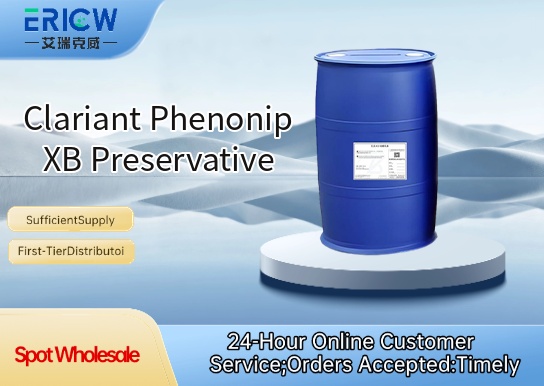
| Brand | Clariant |
| Product Type | In-can biocide (formaldehyde-releasing) |
| Active Ingredient | EMMD (formaldehyde donor) |
| Active Content | approx. 99% |
| Form | Liquid |
| pH Stability | 3–10 |
| Temperature Stability | ≤40℃ |
| Recommended Dosage | 0.05–0.2% |
Q1: What is the primary mode of action of Nipacide FC Fungicide?
A: Nipacide FC Fungicide functions as a broad-spectrum, contact and protective fungicide. Its active ingredient disrupts fungal cell membrane integrity and metabolic processes, effectively inhibiting spore germination and mycelial growth on treated surfaces.
Q2: In which types of industrial applications is Nipacide FC commonly used?
A: It is widely applied in water-based industrial formulations such as metalworking fluids, latex paints, adhesives, construction chemicals, and polymer emulsions—where sustained protection against mold, yeast, and bacteria is required during storage and use.
Q3: Is Nipacide FC compatible with common biocides and formulation additives?
A: Yes, Nipacide FC demonstrates good compatibility with many oxidative and non-oxidative biocides, thickeners, surfactants, and pH adjusters typically found in industrial water-based systems. Compatibility testing under actual formulation conditions is recommended prior to full-scale implementation.
Q4: How should Nipacide FC be dosed in formulations?
A: Dosage depends on formulation requirements, challenge level, and regulatory context. It is typically used at low concentrations—generally ranging from 0.1% to 2% by weight—added during the cool-down phase or post-emulsification to ensure optimal stability and efficacy.
Q5: Does Nipacide FC offer residual protection in end-use applications?
A: Yes, it provides persistent antifungal activity throughout the service life of treated products, particularly in stable, aqueous environments. Its performance is optimized in neutral to mildly alkaline pH ranges and may be reduced under highly acidic or strongly oxidizing conditions.
Contact With Us:
E-mail: wangxingqiang@ericwchem.com
Have a Questions? Call Us:
Add:
Building A1, Jiete Industrial Park, Huangpu District, Guangzhou City, Guangdong Province, China