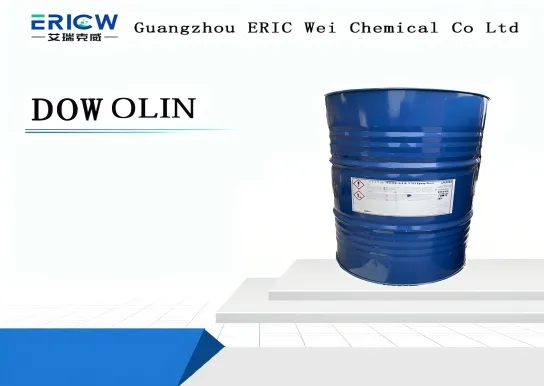
Features Of DOW DEN438 Epoxy Resin
Novolac chemistry - Exceptional chemical and thermal resistance
High functionality - Enhanced crosslinking density for superior durability
Thermal stability - Maintains integrity at continuous high temperatures
Chemical resistance - Withstands harsh acids and solvents
Typical Applications Of DOW DEN438 Epoxy Resin
Chemical process equipment - Reactor and vessel linings
Oil and gas pipelines - Corrosion protection systems
Semiconductor fabrication - Acid-resistant coatings
Aerospace composites - High-temperature components
Electrical insulation - Harsh environment applications
Specifications Of DOW DEN438 Epoxy Resin
| Epoxy Equivalent Weight | g/eq | 175-182 |
| Viscosity at 25°C | cP | 20,000-40,000 |
| Melting Point | °C | 70-80 |
| Gardner Color | - | ≤3 |
| Hydrolyzable Chloride | ppm | ≤500 |
| Softening Point | °C | 65-75 |
| Density at 25°C | g/cm³ | 1.20-1.22 |
| Flash Point | °C | >200 |
DOW DEN438 Epoxy Resin – Frequently Asked Questions (FAQ)
Q1: What is the primary functional role of DOW DEN438 in epoxy formulations?
A: DOW DEN438 is a reactive diluent designed to reduce viscosity and improve processability of epoxy resins without significantly compromising final crosslink density or thermal performance. It participates directly in the curing reaction, contributing to the polymer network.
Q2: Is DOW DEN438 suitable for high-glass-transition-temperature (high-Tg) epoxy systems?
A: Yes — due to its difunctional epoxy structure and relatively rigid molecular backbone, DEN438 supports the development of high-Tg networks when paired with appropriate hardeners such as aromatic amines or anhydrides. Its incorporation typically maintains good thermal stability and mechanical integrity.
Q3: How does DEN438 compare to non-reactive diluents in terms of volatility and VOC profile?
A: Unlike non-reactive diluents, DEN438 is low-volatility and remains chemically bound in the cured matrix, resulting in minimal VOC emissions during processing and no post-cure outgassing. This makes it advantageous for applications requiring low-emission compliance and improved workplace safety.
Q4: Can DEN438 be used in electrically insulating epoxy systems?
A: Yes — when fully cured with compatible hardeners, formulations containing DEN438 exhibit excellent dielectric strength and volume resistivity, making them well-suited for electrical encapsulation, potting, and insulating coatings in power electronics and motor insulation.
 English
 Español
 tiếng việt
 русский