English
 Español
 tiếng việt
 русский
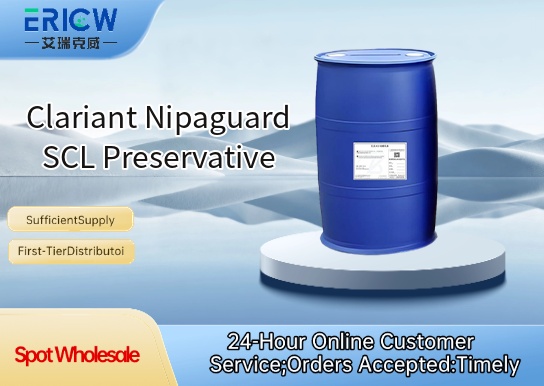
Clariant Nipacide CFB is a low-toxic water-based biocide from the Nipacide series, designed for full microbial protection of water-based products, effectively inhibiting bacteria and fungi in humid conditions to prevent spoilage during storage and use.
Low-toxic safe formula – Mild and low-toxic, friendly to system and environment
Broad-spectrum antibacterial – Effectively inhibits bacteria, fungi and mold
Long-lasting stability in wet state – Excellent anti-corrosion effect in humid environment
Water-soluble and easy to dose – Liquid form, good miscibility, convenient processing
Wide system compatibility – Compatible with most water-based industrial product systems
Water-based adhesives and sealants
Polymer emulsions and synthetic latex
Printing fountain solutions and water-based inks
Metalworking fluids and cutting fluids
Water-based coatings and industrial paints
| Brand | Clariant |
| Product Type | Water-based low-toxic in-can biocide |
| Form | Aqueous liquid |
| Active System | Broad-spectrum antibacterial composite |
| Core Function | Microbial protection, bacteriostatic anti-corrosion, anti-wet spoilage |
| Applicable Systems | All kinds of water-based industrial products |
| Origin | Germany |
Q1: What types of microorganisms does Nipacide CFB effectively control?
A: Nipacide CFB is a broad-spectrum fungicide designed to inhibit the growth of common spoilage fungi and yeasts in water-based industrial systems, including molds such as Aspergillus and Penicillium species, as well as Saccharomyces and Candida yeasts.
Q2: In which industrial applications is Nipacide CFB typically used?
A: It is commonly applied in water-based metalworking fluids, latex emulsions, adhesives, coatings, and pigment dispersions—where microbial stability is critical to product shelf life and performance.
Q3: Is Nipacide CFB compatible with common biocides used for bacterial control?
A: Yes, Nipacide CFB is generally compatible with isothiazolinones and other widely used bactericides, enabling effective combination treatments for comprehensive microbial management in complex formulations.
Q4: How should Nipacide CFB be dosed in formulations?
A: Dosage depends on formulation requirements, challenge level, and regulatory considerations, but it is typically used at low concentrations—generally ranging from 0.1% to 2% by weight—based on laboratory efficacy testing and real-world system monitoring.
Q5: Does Nipacide CFB require pH adjustment or special handling during incorporation?
A: Nipacide CFB is stable across a wide pH range (approximately 4–10) and can be added directly to formulations at ambient temperature without pre-dilution or pH modification under standard processing conditions.
Contact With Us:
E-mail: wangxingqiang@ericwchem.com
Have a Questions? Call Us:
Add:
Building A1, Jiete Industrial Park, Huangpu District, Guangzhou City, Guangdong Province, China