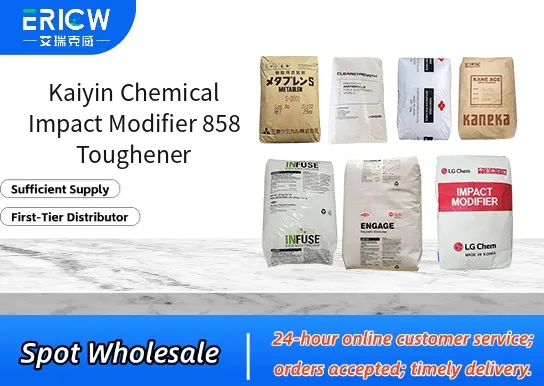
Features Of Kuraray HYBRAR™ 5152 Impact Modifier
20% styrene, vinyl-bond rich SIS, high reactivity for crosslinking
Good compatibility with polar/non-polar resins, ideal for compounding
Excellent flexibility, electrical insulation, easy processing and forming
Suitable for adhesives, asphalt modification and polymer modification
Physical form: pellet, easy to store and transport
Typical Applications Of Kuraray HYBRAR™ 5152 Impact Modifier
Adhesives & sealants (hot melt adhesives, pressure-sensitive adhesives)
Asphalt modification (road pavement, waterproofing membranes)
Polymer modification (impact/toughness enhancement)
Wire & cable insulation, consumer electronics and daily necessities
Compounding with polar/non-polar resins for various applications
Specifications Of Kuraray HYBRAR™ 5152 Impact Modifier
| Physical Properties |
|
| Styrene Content | 20 wt% |
| Density | 0.94 g/cm³ |
| Hardness (Type A) | 60 Shore A |
| Melt Flow Properties |
|
| MFR (230°C, 2.16 kg) | 1.6 g/10min |
| MFR (200°C, 10.0 kg) | 8.8 g/10min |
| Solution Viscosity (Toluene, 30°C) |
|
| 20 wt% | 650 mPa·s |
| 15 wt% | 100 mPa·s |
| Physical Form |
|
| Physical Form | Pellet |
Kuraray HYBRAR™ 5152 Impact Modifier – Frequently Asked Questions (FAQ)
Q1: What is the primary function of HYBRAR™ 5152 in polymer formulations?
A: HYBRAR™ 5152 is a thermoplastic elastomer-based impact modifier designed to enhance toughness and low-temperature impact resistance in rigid thermoplastics—particularly polycarbonate (PC), PC/ABS blends, and other engineering resins—without significantly compromising stiffness or heat resistance.
Q2: Is HYBRAR™ 5152 compatible with polycarbonate-based systems?
A: Yes—HYBRAR™ 5152 is specifically engineered for compatibility with polycarbonate and PC-rich blends. Its molecular architecture promotes good interfacial adhesion and dispersion, enabling effective stress transfer and consistent impact performance without phase separation or haze formation in transparent applications.
Q3: How is HYBRAR™ 5152 typically incorporated into compound formulations?
A: It is generally introduced during melt compounding—via twin-screw extrusion—alongside the base resin and other additives. Due to its thermoplastic nature and low melt viscosity, it disperses readily and requires no special pre-treatment or drying beyond standard handling for hygroscopic polymers.
Q4: Does HYBRAR™ 5152 affect the thermal stability or processing window of the host polymer?
A: HYBRAR™ 5152 exhibits good thermal stability up to typical processing temperatures for engineering thermoplastics (e.g., 240–280 °C). When used within recommended dosage ranges, it does not accelerate degradation of PC or PC/ABS systems and maintains compatibility with standard processing conditions.
Q5: What are the key handling and storage recommendations for HYBRAR™ 5152?
A: Store in original sealed packaging at room temperature and low humidity. Avoid prolonged exposure to ambient moisture prior to processing, as excessive absorption may affect melt homogeneity. Standard industrial handling practices for thermoplastic elastomers apply.
 English
 Español
 tiếng việt
 русский