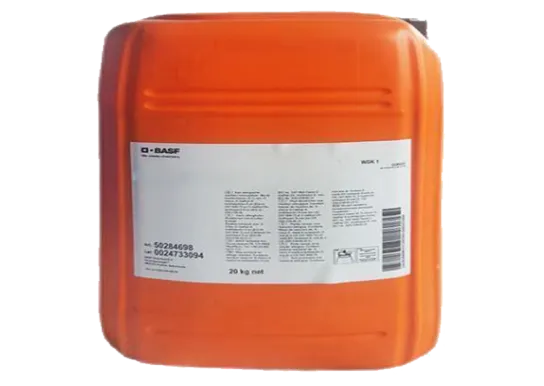
EFKA PB 2010, a high-performance silicone-free defoamer, is designed for solvent-based coating systems—ideal for resin-based high-gloss topcoats. It offers excellent defoaming and long-lasting anti-foaming capabilities, effectively eliminating both microfoam and macrofoam, with particular suitability for high-shear or high-speed applications. It meets environmental standards, ensuring safety and reliability.
Efficient Defoaming: Rapidly eliminates microfoam and macrofoam, enhancing surface quality.
Long-Lasting Anti-Foaming: Provides persistent foam suppression, suitable for high-shear environments.
High Compatibility: Works well with various water-based systems like pure acrylic and styrene-acrylic emulsions.
Eco-Friendly: Complies with environmental standards, suitable for indirect food contact applications.
Cost-Effective: Boasts a high cost-performance ratio, fit for large-scale use.
Resin-Based High-Gloss Topcoats: Applied in high-gloss topcoats to create a smooth surface.
Solvent-Based Adhesives: Suitable for JONCRYL polyols, Luwipal, or Plastopal amino resins.
Primers and Sealers: Used in primers and sealers to enhance coating effects
Chemical Name | Silicone-free defoaming polymer solution |
Appearance | Translucent liquid |
Active Content | 100% |
Density (20℃) | 0.87 g/cm³ |
Flash Point | 41℃ (86℉) |
VOC Content | 80% |
Solvent | Naphtha/Alkylbenzene |
Packaging | 25kg/drum, 200kg/drum |
Origin | Germany |
Q1: What types of industrial coatings is Efka PB 2010 Defoamer typically used in?
A: Efka PB 2010 is widely employed in water-based architectural and industrial coatings, including interior and exterior wall paints, primers, and basecoats, where rapid foam suppression and long-term foam stability control are required during manufacturing and application.
Q2: How does Efka PB 2010 differ from silicone-based defoamers?
A: Unlike many silicone-based systems, Efka PB 2010 is a non-silicone, polyether-modified polymer defoamer designed to minimize surface defects such as craters, pinholes, or gloss mottle—making it especially suitable for high-gloss and sensitive decorative coatings where silicone contamination must be avoided.
Q3: What is the recommended addition point and method for optimal performance?
A: For best results, Efka PB 2010 should be added during the let-down phase, after pigment grinding and before thickener addition. It is generally introduced under moderate agitation and is compatible with both low- and high-shear mixing conditions commonly used in paint production.
Q4: Is Efka PB 2010 compatible with common thickeners and rheology modifiers?
A: Yes—Efka PB 2010 demonstrates good compatibility with associative and non-associative thickeners, including HEC, HASE, and ASE types, as well as cellulose ethers and polyurethane thickeners, without compromising viscosity stability or causing phase separation.
Q5: Can Efka PB 2010 be used in low-VOC or zero-VOC formulations?
A: Yes—Efka PB 2010 is formulated to support low- and zero-VOC coating systems. It contains no regulated VOC solvents and contributes negligible volatile content, aligning with modern environmental and regulatory expectations for sustainable paint development.
Contact With Us:
E-mail: wangxingqiang@ericwchem.com
Have a Questions? Call Us:
Add:
Building A1, Jiete Industrial Park, Huangpu District, Guangzhou City, Guangdong Province, China
 English
 Español
 tiếng việt
 русский