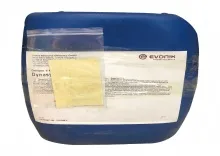
Momentive A-172NT (vinyl tris(2-methoxyethoxy)silane) is a vinyl-functional silane coupling agent that enhances interfacial adhesion between organic polymers (e.g., polyester, EPDM) and inorganic substrates (e.g., glass fibers, fillers). It improves mechanical strength, electrical properties, and wet-condition performance in composites, coatings, and cables. Compatible with radical polymerization systems, it enables covalent bonding while reducing viscosity for easier processing. Ideal for FRP and wire insulation, it complies with REACH standards

Dual Reactivity - Vinyl group bonds with resins; methoxyethoxy links to glass/fillers
Wet-Strength Retention - Enhances mechanical/electrical properties after water exposure
Process Optimization - Lowers viscosity for improved filler dispersion
Multi-Matrix Compatibility - Works with polyesters, epoxies, and elastomers
Environmental Safety - Halogen-free, suitable for waterborne systems
FRP Reinforcement - Glass fiber treatment for high-strength composites
Industrial Coatings - Weather-resistant finishes for metal substrates
Adhesive Formulations - Improved bonding in structural adhesives
Rubber Compounding - Mineral-filled EPDM for automotive seals
Chemical Name | Vinyl Tris(2-Methoxyethoxy) Silane |
Appearance | Colorless to light yellow transparent liquid |
Molecular Weight | 248.4 g/mole |
Specific Gravity (25/25℃) | 1.033 |
Boiling Point (760mmHg) | 255℃ |
Flash Point (Sealed Cup) | 108℃ |
Solubility | Soluble in methanol, ethanol, acetone, etc., and hydrolyzed in pH=4 water |
Packaging | 25KG/drum |
Q1: What is the primary functional mechanism of A-172NT in composite systems?
A: A-172NT acts as a bifunctional molecular bridge: its alkoxy groups hydrolyze to form silanols that condense with inorganic surfaces (e.g., glass, silica, metals), while its methacryloxy group copolymerizes with organic resins such as acrylics, unsaturated polyesters, and vinyl esters—enhancing interfacial adhesion and stress transfer.
Q2: How should A-172NT be handled and stored to maintain stability?
A: Store in tightly sealed original containers under cool, dry conditions, away from moisture and direct sunlight. Once opened, minimize exposure to ambient humidity; use within recommended shelf life and avoid prolonged contact with water or strong acids/bases prior to application.
Q3: Is A-172NT compatible with common free-radical polymerization systems?
A: Yes—its methacryloxy functionality readily participates in free-radical initiated polymerizations, making it well-suited for use in thermoset composites, radiation-curable coatings, and acrylic-based adhesives without inhibiting cure kinetics when properly dosed.
Q4: What types of substrates benefit most from surface treatment with A-172NT?
A: It delivers optimal performance on hydroxyl-rich inorganic surfaces—including fused silica, quartz, alumina, glass fibers, and metal oxides—particularly where improved dispersion, reduced agglomeration, and long-term environmental resistance are critical in filled polymers or fiber-reinforced composites.
Contact With Us:
E-mail: wangxingqiang@ericwchem.com
Have a Questions? Call Us:
Add:
Building A1, Jiete Industrial Park, Huangpu District, Guangzhou City, Guangdong Province, China
 English
 Español
 tiếng việt
 русский