English
 Español
 tiếng việt
 русский
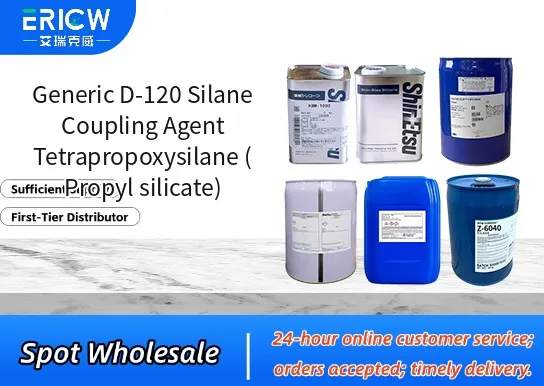
High hydrolytic stability due to sterically hindered propoxy groups, enabling extended shelf life and controlled reactivity.
Excellent compatibility with both organic polymers and inorganic substrates such as glass, silica, and metal oxides.
Low volatility and favorable handling safety profile compared to methoxy- or ethoxy-silanes.
Acts as an effective precursor for sol-gel derived silica coatings and hybrid organic-inorganic matrices.
Enables strong covalent interfacial bonding, improving mechanical strength and moisture resistance in composite systems.
Surface modification of fillers (e.g., silica, calcium carbonate) in rubber and thermoplastic composites.
Adhesion promotion in automotive sealants, structural adhesives, and aerospace bonding primers.
Hybrid sol-gel formulation for anti-corrosion and self-cleaning coatings on metals and glass.
Crosslinking agent in silicone-modified alkyds and hybrid acrylic-silica architectural coatings.
Reinforcement interface enhancer in fiber-reinforced polymer (FRP) composites and pultrusion resins.
| Chemical Type | Tetrapropoxysilane (Propyl silicate) |
| Product Form | Clear, colorless to pale yellow liquid |
| Appearance | Homogeneous, mobile liquid at room temperature |
| Molecular Formula | C12H28O4Si |
| Molecular Weight | 280.4 g/mol |
| Density (25°C) | 0.93–0.95 g/cm³ |
| Refractive Index (20°C) | 1.390–1.395 |
| Flash Point (Closed Cup) | 65–70°C |
Contact With Us:
E-mail: wangxingqiang@ericwchem.com
Have a Questions? Call Us:
Add:
Building A1, Jiete Industrial Park, Huangpu District, Guangzhou City, Guangdong Province, China