English
 Español
 tiếng việt
 русский
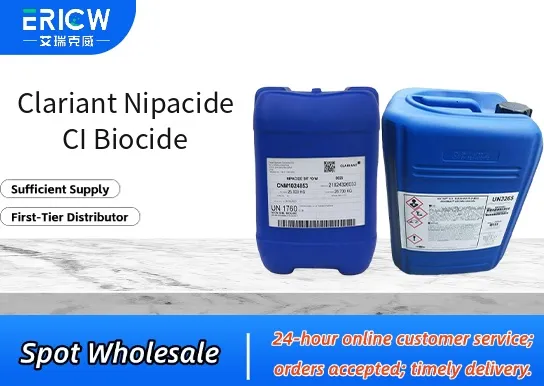
Clariant Nipacide BSM is an in-can biocide from Nipacide series, formulated with BIT/MIT, featuring solvent-free, low VOC and APEO-free, designed for efficient in-can preservation of water-based products with excellent stability and environmental protection.
Compound broad-spectrum antibacterial – BIT/MIT synergy, effectively against bacteria, yeast and fungi
Environmentally friendly – Solvent-free, low VOC, APEO-free, meeting environmental compliance
Excellent working stability – Superior pH and temperature stability, suitable for various industrial scenarios
Solvent-free and safe – Solvent-free formula, no irritation and good compatibility
Efficient and economical – Long-lasting preservation at low dosage, reducing use cost
Water-based coatings and latex paints
Polymer emulsions and adhesives
Metalworking fluids and cutting fluids
Water-based inks and printing additives
Construction additives and water-based adhesives
| Brand | Clariant |
| Product Type | BIT/MIT compound in-can biocide |
| Form | Aqueous liquid |
| Active Ingredients | BIT (Benzisothiazolinone) + MIT (Methylisothiazolinone) |
| Formula Features | Low VOC, APEO-free, water-based formula |
| Core Function | In-can preservation, broad-spectrum antibacterial, anti-microbial spoilage |
| Applicable Systems | Various water-based industrial product systems |
Q1: What is the primary mode of action of Nipacide BSM?
A: Nipacide BSM functions as a broad-spectrum fungicide through inhibition of fungal cell wall synthesis and disruption of membrane integrity, delivering reliable protection against common spoilage fungi in water-based industrial systems.
Q2: In which types of industrial formulations is Nipacide BSM typically used?
A: It is widely applied in water-miscible metalworking fluids, latex paints and coatings, adhesives, sealants, and other aqueous polymer systems where long-term microbial stability is required during storage and use.
Q3: Is Nipacide BSM compatible with common biocides used for bacterial control?
A: Yes, Nipacide BSM demonstrates good compatibility with many isothiazolinone- and formaldehyde-releasing biocides, enabling effective broad-spectrum preservation strategies when combined as part of a tailored preservative package.
Q4: How should Nipacide BSM be incorporated into a formulation?
A: It is recommended to add Nipacide BSM during the cool-down phase or post-emulsification stage to avoid thermal degradation. Dosage depends on formulation requirements but generally ranges from 0.1% to 2% by weight, with optimization guided by challenge testing under representative conditions.
Q5: Does Nipacide BSM require pH adjustment for optimal performance?
A: Performance is generally stable across a broad pH range (approximately 5–10), though maximum efficacy is typically observed in neutral to mildly alkaline systems. Significant deviations outside this range may affect solubility or activity and should be evaluated case by case.
Contact With Us:
E-mail: wangxingqiang@ericwchem.com
Have a Questions? Call Us:
Add:
Building A1, Jiete Industrial Park, Huangpu District, Guangzhou City, Guangdong Province, China