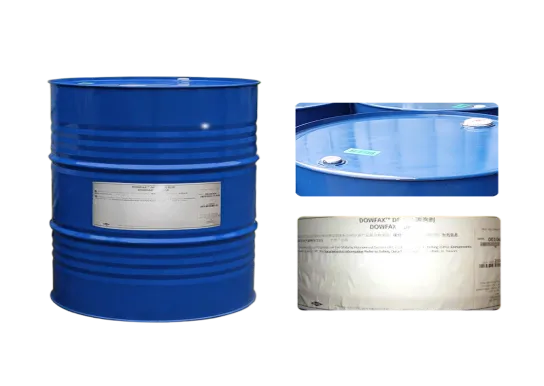
Product Information of DOW XIAMETER AFE-3150 Defoamer
Process Adaptability: Works in pH 3-12 systems, including caustic pulping baths.
Heat Resistance: Endures 120°C conditions without viscosity changes.
Nanoscale Performance: 5 μm particle size boosts penetration in nano-coatings.
Eco-Friendliness: Contains no APEO and meets FDA 21 CFR 175.300 standards.
Cost Efficiency: At 0.05%-0.3% dosage, its defoaming efficiency is 40% higher than polyether-based defoamers.
Areas of Application of DOW XIAMETER AFE-3150 Defoamer
Coatings Production: Eliminates fisheye flaws in latex paints (0.05-0.2% dosage).
Paper Pulping: Controls foam in kraft pulping processes (pH 12-13).
Textile Dyeing: Lowers steam use in jet dyeing machines.
Ink Manufacturing: Removes microbubbles during UV ink polymerization.
Food Processing: Complies with GB 2760-2014 for application in fermentation processes.
Specifications Of DOW XIAMETER AFE-3150 Defoamer
Type | Silicone defoamer emulsion |
Appearance | Milky homogeneous liquid |
Active Content | Polydimethylsiloxane (55%-65%) |
Dynamic Viscosity | 800-3,000 mPa·s |
pH Range | 3-12 |
Surface Tension | 24.5 dyn/cm |
Flash Point | >100°C (closed cup) |
Dispersion Stability | ≥95% (10,000 rpm/30 mins) |
Shelf Life | 360 days (sealed, 5-35°C) |
Packaging | 200kg/PE drum or 25kg/jerrican |
DOW XIAMETER AFE-3150 Defoamer – Frequently Asked Questions (FAQ)
Q1: What types of industrial processes is AFE-3150 most commonly used in?
A: DOW XIAMETER AFE-3150 Defoamer is widely employed in water-based industrial systems where persistent foam interferes with processing efficiency—particularly in coatings, adhesives, construction mortars, and cleaning formulations. Its silicone-polyether hybrid structure provides rapid knockdown and lasting foam suppression under shear and varying pH conditions.
Q2: How should AFE-3150 be incorporated into a formulation for optimal performance?
A: AFE-3150 is typically added during the post-emulsification or let-down stage to minimize mechanical stress on the defoamer dispersion. It is compatible with both high-shear and low-shear mixing equipment. Pre-dilution with water or a portion of the base solvent may improve uniform distribution, especially in highly viscous systems.
Q3: Is AFE-3150 suitable for use in low-VOC or high-solids formulations?
A: Yes—AFE-3150 contains no volatile organic solvents and is formulated to support modern regulatory and sustainability goals. It performs effectively in low-VOC, high-solids, and water-reduced systems without compromising defoaming efficiency or film integrity.
Q4: Does AFE-3150 affect gloss, clarity, or substrate wetting in finished films?
A: When used within recommended dosage ranges, AFE-3150 generally does not negatively impact optical properties or surface appearance in clear or pigmented systems. Its balanced hydrophile-lipophile profile helps maintain compatibility while minimizing surface defects such as craters or haze.
 English
 Español
 tiếng việt
 русский