Features Of Honeywell Polyethylene Homopolymer Wax Powder ACumist D-6
Surface Enhancement: Reduces coating friction to 0.25-0.3 COF for smoother application
Durability Boost: Improves abrasion resistance by 40% (ASTM D4060)
Gloss Control: Maintains 85+ GU at 1% loading; adjustable matting effect
Ink Performance: Enhances print clarity in gravure inks (>500 rub cycles)
Economic Efficiency: 20% lower dosage vs. conventional waxes
Easy Dispersion: 5-7μm particle size ensures uniform blending
Typical Applications Of Honeywell Polyethylene Homopolymer Wax Powder ACumist D-6
Industrial Coatings: UV-cured metal/wood coatings for appliances
Packaging Inks: Flexographic inks for food/label printing
Automotive Paints: Clear coats requiring scratch resistance
Plastic Additives: Slip agent for PVC/PP films
Specifications Of Honeywell Polyethylene Homopolymer Wax Powder ACumist D-6
Chemical Type | Polyethylene (PE) Homopolymer |
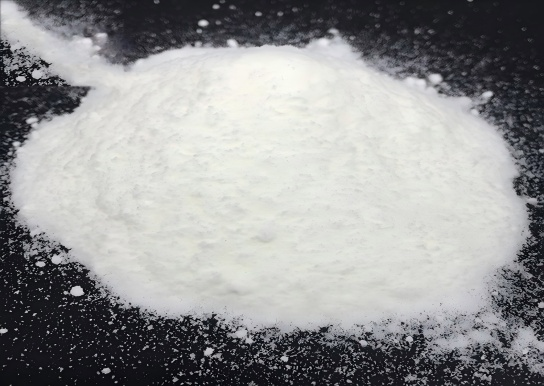
Appearance | Powder |
Brand | Honeywell |
Model | ACumist D-6 |
Melting Point | Approx. 105-115℃ |
Density | 0.93 g/cm³ |
Packaging | 20kg/bag |
Origin | USA |
Honeywell Polyethylene Homopolymer Wax Powder ACumist D-6 – Frequently Asked Questions (FAQ)
Q1: What is the primary function of ACumist D-6 in coating and ink formulations?
A: ACumist D-6 functions primarily as a matting agent and surface modifier, delivering controlled gloss reduction, improved scratch resistance, and enhanced slip characteristics without significantly affecting film clarity or adhesion.
Q2: Is ACumist D-6 compatible with water-based systems?
A: Yes, ACumist D-6 is widely used in both solvent-based and water-based coatings and inks. Its hydrophobic polyethylene surface may require appropriate dispersion techniques—such as high-shear mixing or use of compatible wetting agents—to ensure stable incorporation and uniform distribution.
Q3: How does ACumist D-6 differ from other polyethylene wax powders in terms of particle morphology?
A: ACumist D-6 features a spherical, low-agglomerate particle structure with narrow size distribution, which supports rapid dispersion, reduced viscosity impact, and consistent surface performance—particularly beneficial in high-gloss or thin-film applications where particle irregularity could cause haze or defects.
Q4: Can ACumist D-6 be used in thermoplastic polymer processing applications?
A: While primarily designed for coatings and printing inks, ACumist D-6 has been successfully evaluated as a lubricant and release aid in certain thermoplastic compounding processes—especially where low-migration, non-blooming surface effects are desired. Performance should be verified under actual processing conditions.
 English
 Español
 tiếng việt
 русский