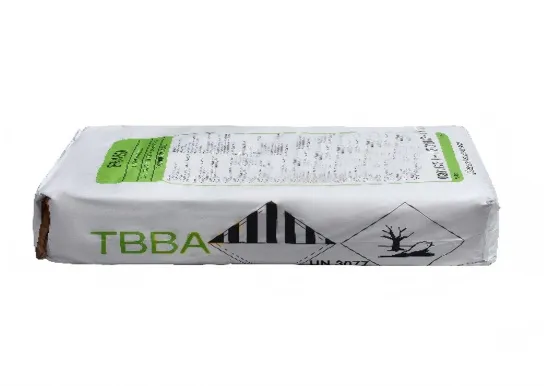
Features Of ICL Dead Sea FR-513 Flame Retardants
High Reactivity - 73% aliphatic bromine for superior flame suppression
System Compatibility - Excellent solubility in polyurethane matrices
Stability Profile - Outstanding thermal and hydrolytic resistance
Processing Flexibility - Can be blended with bifunctional FR-522
Performance Retention - Maintains foam physical properties
Typical Applications Of ICL Dead Sea FR-513 Flame Retardants
Rigid Polyurethane Foams - Building insulation panels
Flexible PU Foams - Automotive seating and furnishings
Reactive Intermediates - Phosphorus-bromine FR production
Specialty Coatings - Fire-resistant surface treatments
Composite Materials - Structural insulation components
Specifications Of ICL Dead Sea FR-513 Flame Retardants
| Chemical Composition | C5H9Br3O |
| Physical Form | White to off-white flakes |
| Bromine Content | 73% ± 0.5% |
| Melting Point | 65°C ± 2°C |
| Hydroxyl Value | 173 mg KOH/g |
| Thermal Decomposition | 135°C (2% weight loss) |
| Bulk Density | 0.7-0.9 g/cm³ |
ICL Dead Sea FR-513 Flame Retardants – Frequently Asked Questions (FAQ)
Q1: What types of polymers is FR-513 compatible with?
A: FR-513 is primarily designed for use in engineering thermoplastics such as polyamide (PA6, PA66), polybutylene terephthalate (PBT), and polycarbonate (PC) blends. It demonstrates good compatibility and dispersion in these matrices without significantly compromising mechanical properties or processability.
Q2: How does FR-513 achieve flame retardancy?
A: FR-513 functions through a combination of condensed-phase action—promoting char formation—and gas-phase radical quenching. Its phosphorus-based chemistry helps interrupt combustion reactions at multiple stages, supporting UL94 V-0 and V-1 ratings in suitable formulations.
Q3: Is FR-513 suitable for halogen-free flame-retarded applications?
A: Yes, FR-513 is a halogen-free flame retardant based on organophosphorus chemistry. It enables compliance with halogen-free requirements in electronics, automotive, and consumer goods applications where low smoke and reduced corrosivity are priorities.
Q4: Does FR-513 affect the thermal stability or processing window of the polymer?
A: FR-513 exhibits good thermal stability up to typical processing temperatures of engineering plastics (e.g., extrusion and injection molding). It generally maintains polymer melt flow and does not cause premature degradation when used within recommended dosage ranges and standard processing conditions.
Q5: What is the typical dosage range for achieving UL94 V-0 performance?
A: Dosage depends on the base polymer, filler content, and part geometry, but FR-513 is typically used at low concentrations—generally ranging from 0.1% to 2% by weight—to achieve UL94 V-0 in optimized systems. Formulators are advised to conduct application-specific testing to determine optimal loading.
 English
 Español
 tiếng việt
 русский