English
 Español
 tiếng việt
 русский
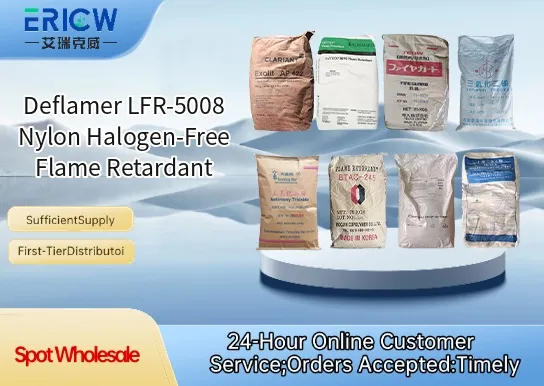
UL 94 V-0 rated flame retardancy in 30% glass-fiber reinforced PA6 and PA66 at loading levels of 12–15 wt%
Halogen-free formulation ensures low smoke density, minimal corrosive gas emission, and compliance with RoHS and REACH directives
Excellent thermal stability up to 300°C, supporting standard nylon processing conditions including injection molding and extrusion
Good compatibility with polyamide matrices, preserving mechanical properties such as tensile strength and impact resistance
No blooming or migration during long-term aging, ensuring consistent surface appearance and flame-retardant performance
Electrical connectors and housings for automotive ECUs and charging systems
Power tool components requiring UL-certified flame-retardant engineering plastics
Industrial automation enclosures and sensor housings exposed to elevated ambient temperatures
Consumer electronics structural parts where halogen-free compliance is mandated by OEM specifications
Railway interior components meeting EN 45545-2 fire safety requirements
| Chemical Type | Organophosphorus-based flame retardant |
| Product Form | Powder |
| Appearance | White to off-white free-flowing powder |
| Primary Applications | Flame retardancy for PA6, PA66, and PA6/PA66 blends |
| Key Features | Halogen-free, UL 94 V-0 capable, high thermal stability |
| Benefits | Low smoke, no corrosion, excellent processability and mechanical property retention |
| Density (g/cm³) | 1.45–1.55 |
| Onset Decomposition Temperature (TGA, N₂, 10°C/min) | ≥290°C |
Q1: What types of nylon resins is Deflamer LFR-5008 compatible with?
A: Deflamer LFR-5008 is specifically formulated for use in polyamide 6 (PA6), polyamide 66 (PA66), and their copolymer blends. It demonstrates good dispersion and thermal stability during standard melt processing of these engineering thermoplastics.
Q2: How does LFR-5008 achieve flame retardancy without halogenated compounds?
A: LFR-5008 operates primarily through a condensed-phase mechanism, promoting char formation and reducing fuel release during thermal decomposition. Its phosphorus- and nitrogen-based synergistic chemistry enhances intumescence and surface barrier development, meeting UL94 V-0 requirements at appropriate loading levels.
Q3: Does LFR-5008 affect the mechanical properties of nylon parts?
A: When properly compounded and optimized, LFR-5008 delivers balanced performance—maintaining acceptable tensile strength, impact resistance, and heat deflection temperature. Minor reductions in ductility may occur at higher loadings; formulation tuning and compatibilizer use are recommended to preserve mechanical integrity.
Q4: Is LFR-5008 suitable for applications requiring regulatory compliance for electronics or automotive interiors?
A: Yes—LFR-5008 is halogen-free and supports compliance with major industry expectations for low-corrosivity, low-smoke, and RoHS-conformant materials. It is widely used in connectors, housings, and under-hood components where halogen-free flame retardancy is specified.
Contact With Us:
E-mail: wangxingqiang@ericwchem.com
Have a Questions? Call Us:
Add:
Building A1, Jiete Industrial Park, Huangpu District, Guangzhou City, Guangdong Province, China