English
 Español
 tiếng việt
 русский
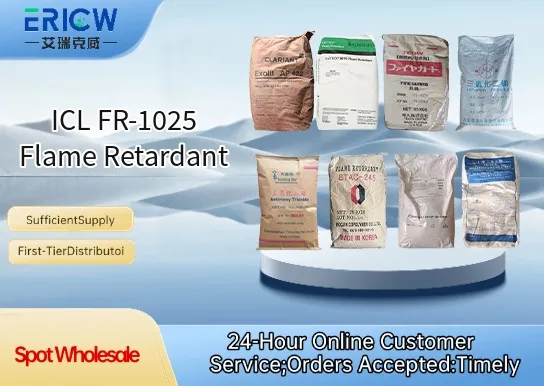
Halogen-free formulation ensuring low smoke and minimal toxic gas emission during combustion.
Excellent thermal stability, maintaining performance up to 300 °C in polymer processing.
High phosphorus content enabling efficient char formation and condensed-phase flame inhibition.
Good compatibility with polyolefins, engineering thermoplastics, and elastomers without compromising mechanical properties.
Non-migrating design providing long-term flame retardancy retention under thermal and mechanical stress.
Wire and cable jacketing compounds for low-smoke zero-halogen (LSZH) applications.
Flame-retarded polypropylene (PP) and polyethylene (PE) used in automotive interior components.
Electrical enclosures and housings requiring UL 94 V-0 or V-1 rating at thin wall sections.
Thermoplastic elastomer (TPE) formulations for flexible building and construction profiles.
3D printing filaments where fire safety compliance meets regulatory requirements for indoor use.
| Chemical Type | Organophosphorus compound (phosphinate-based) |
| Product Form | Free-flowing white to off-white granules |
| Appearance | Uniform granular solid, no visible dust or agglomerates |
| Density (23 °C) | 1.45–1.52 g/cm³ |
| Melting Range | 280–305 °C (DSC, heating rate 10 °C/min) |
| Phosphorus Content | 18.5–19.5 wt% |
| Moisture Content | ≤ 0.15 wt% (by Karl Fischer titration) |
| Thermal Decomposition Onset (TGA, N₂, 10 °C/min) | ≥ 320 °C |
Q1: What is the primary chemical nature and mechanism of action of ICL FR-1025?
A: ICL FR-1025 is a reactive phosphorus-based flame retardant designed to chemically incorporate into polymer backbones—particularly polyurethanes and epoxy resins—during synthesis. Its mode of action involves promoting char formation in the condensed phase and releasing non-combustible gases during thermal decomposition, thereby reducing fuel availability and heat release.
Q2: Is ICL FR-1025 suitable for flexible or rigid polyurethane foams?
A: Yes, ICL FR-1025 is widely used in both flexible and rigid PU foam formulations. As a reactive additive, it offers excellent compatibility and permanence, minimizing migration or leaching risks commonly associated with additive flame retardants—making it especially valuable for long-life applications requiring consistent fire performance.
Q3: How does ICL FR-1025 affect processing and final physical properties of cured resins?
A: When properly formulated, ICL FR-1025 typically has minimal impact on pot life, gel time, or demold behavior in thermoset systems. It generally preserves key mechanical properties—including tensile strength, elongation, and thermal stability—while delivering effective flame retardancy without significant trade-offs in processability or end-use performance.
Q4: Can ICL FR-1025 be used in combination with other flame retardants?
A: Yes, ICL FR-1025 is often used synergistically with halogen-free co-additives such as melamine derivatives or metal hydroxides. Compatibility should be verified case-by-case through small-scale trials, as interactions may influence cure kinetics, dispersion, or final fire-test performance across different polymer matrices.
Q5: What are typical handling and storage recommendations for ICL FR-1025?
A: Store in original sealed containers at temperatures between 5 °C and 30 °C, away from direct sunlight and moisture. Avoid prolonged exposure to high humidity, as the material is hygroscopic and moisture absorption may affect reactivity in moisture-sensitive systems. Standard industrial PPE—including gloves and eye protection—is recommended during handling.
Contact With Us:
E-mail: wangxingqiang@ericwchem.com
Have a Questions? Call Us:
Add:
Building A1, Jiete Industrial Park, Huangpu District, Guangzhou City, Guangdong Province, China