English
 Español
 tiếng việt
 русский
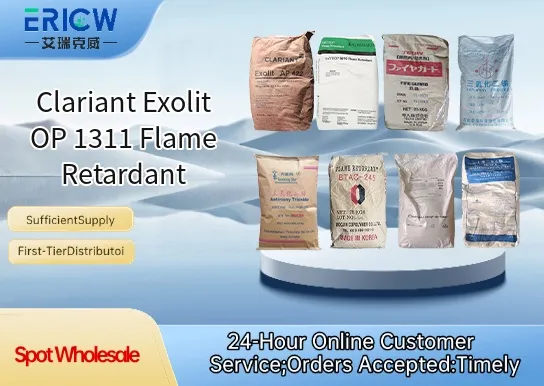
Halogen-free, phosphorus-based flame retardant offering excellent fire safety performance.
Designed for efficient dispersion and compatibility in polyolefin-based compounds.
Low smoke and low toxicity during combustion, supporting improved fire safety and environmental compliance.
Good thermal stability up to 280 °C, enabling processing via extrusion and injection molding.
Enables UL 94 V-0 rating at low loadings (typically 15–22 wt%) in PP and PE formulations.
Flame-retarded polypropylene (PP) for automotive interior components.
Wire and cable jacketing compounds based on polyethylene (PE) and thermoplastic elastomers (TPE).
Electrical and electronic housings requiring UL 94 V-0 and RoHS compliance.
Household appliance parts exposed to elevated temperatures and ignition sources.
Industrial packaging materials where flame resistance and regulatory compliance are critical.
| Chemical Type | Organophosphorus compound |
| Product Form | Free-flowing white granules |
| Appearance | White to off-white granular solid |
| Density (23 °C) | 1.45–1.55 g/cm³ |
| Melting Range | 260–280 °C |
| Moisture Content (max.) | 0.3 wt% |
| pH (1% aqueous suspension) | 4.5–6.5 |
| Primary Applications | Polyolefins (PP, PE), TPEs, and engineering plastics |
Q1: What is the primary chemical nature and mechanism of action for Exolit OP 1311?
A: Exolit OP 1311 is an organophosphorus-based flame retardant designed for gas-phase flame inhibition. It decomposes upon heating to release phosphorus-containing radicals that interrupt combustion chain reactions in the vapor phase, thereby reducing flame spread and heat release without forming a significant char layer.
Q2: In which polymer systems is Exolit OP 1311 most commonly used?
A: It is widely applied in engineering thermoplastics such as polyamide 6 and polyamide 66, particularly where halogen-free flame retardancy and good mechanical property retention are required. It is also compatible with certain polyesters and polyolefin blends when appropriately stabilized and compounded.
Q3: How does processing temperature affect the performance and stability of Exolit OP 1311 during compounding?
A: Exolit OP 1311 exhibits good thermal stability up to approximately 280 °C, making it suitable for standard melt compounding processes in polyamides. Prolonged exposure above this threshold or excessive shear may lead to partial decomposition and reduced flame retardant efficiency, so optimized screw design and residence time control are recommended.
Q4: Does Exolit OP 1311 impact the electrical properties of flame-retarded compounds?
A: Yes — due to its polar, phosphorus-rich structure, Exolit OP 1311 can influence dielectric behavior and surface resistivity. In applications requiring high insulation performance (e.g., electronic housings), formulation adjustments — such as adding compatible stabilizers or optimizing filler content — may be necessary to maintain target electrical specifications.
Q5: Is Exolit OP 1311 suitable for food-contact or sensitive indoor applications?
A: While Exolit OP 1311 is halogen-free and designed for low volatility and low smoke generation, it is not pre-qualified for direct food-contact applications. Its suitability for indoor environments depends on final compound testing — including emissions and odor evaluation — as performance varies with matrix, loading level, and processing conditions.
Contact With Us:
E-mail: wangxingqiang@ericwchem.com
Have a Questions? Call Us:
Add:
Building A1, Jiete Industrial Park, Huangpu District, Guangzhou City, Guangdong Province, China