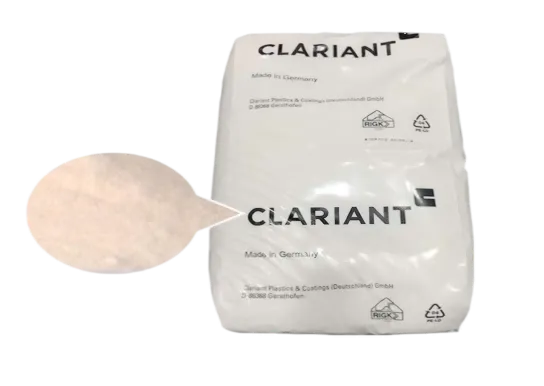
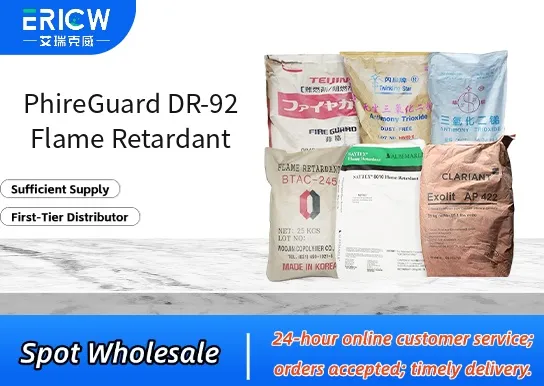
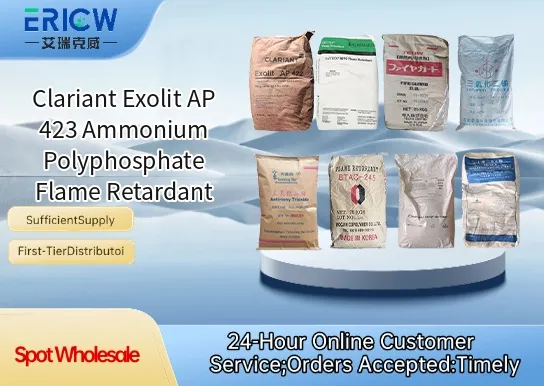
Features Of Clariant Exolit AP 420 Flame Retardants
Excellent Dispersion - Homogeneous distribution in substrates
Water Resistance - Maintains performance in humid conditions
Easy Application - Simplified processing and handling
Thermal Stability - Withstands processing temperatures
Typical Applications Of Clariant Exolit AP 420 Flame Retardants
Textile Finishing - Fabric fireproofing solutions
Paper Treatment - Flame-retardant packaging materials
Adhesive Systems - Safe bonding applications
Industrial Coatings - Protective surface treatments
Specifications Of Clariant Exolit AP 420 Flame Retardants
| Chemical Base | Ammonium polyphosphate |
| Form | Aqueous solution |
| Phosphorus Content | 12.5-13.5% |
| Water Content | 53.5-56.5% |
| Nitrogen Content | ≥9% |
| Density | 1.29-1.31 g/cm³ |
| Packaging | 25kg containers |
Clariant Exolit AP 420 Flame Retardants – Frequently Asked Questions (FAQ)
Q1: What is the primary chemical nature and mechanism of action of Exolit AP 420?
A: Exolit AP 420 is an organophosphorus-based flame retardant designed for intumescent action. It functions by promoting char formation upon thermal exposure, thereby creating a protective barrier that insulates the underlying polymer and reduces heat transfer and volatile release.
Q2: In which polymer systems is Exolit AP 420 most commonly used?
A: It is widely applied in engineering thermoplastics such as polyamide (PA6 and PA66), polybutylene terephthalate (PBT), and polyethylene terephthalate (PET), particularly where halogen-free flame retardancy and good mechanical property retention are required.
Q3: How does Exolit AP 420 affect processing stability and color in final compounds?
A: Exolit AP 420 offers good thermal stability during standard melt processing (e.g., extrusion and injection molding) and typically delivers neutral to light-amber coloration, making it suitable for applications where post-coloring or natural-toned parts are desired.
Q4: Is Exolit AP 420 compatible with common polymer additives like stabilizers and lubricants?
A: Yes — Exolit AP 420 generally exhibits good compatibility with typical polymer additives including antioxidants, UV stabilizers, and internal/external lubricants, though formulation-specific compatibility testing is recommended to ensure optimal performance and dispersion.
Q5: What is the typical dosage range for achieving UL94 V-0 rating in polyamide-based compounds?
A: Dosage depends on the specific polymer grade, filler content, and part thickness, but effective flame retardancy is typically achieved at low concentrations — generally ranging from 0.1% to 2% by weight in optimized formulations.
 English
 Español
 tiếng việt
 русский