English
 Español
 tiếng việt
 русский
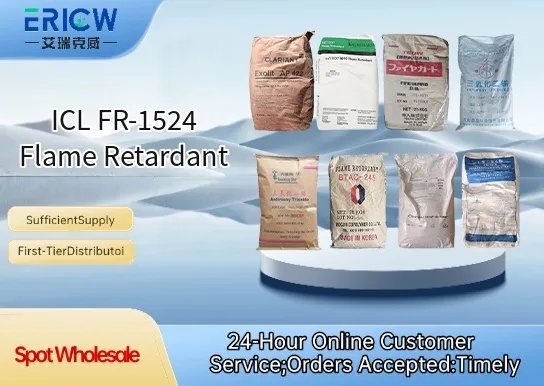
Halogen-free phosphorus-based chemistry for environmentally responsible flame retardancy.
Excellent thermal stability, supporting processing temperatures up to 280 °C.
Low volatility and minimal plate-out during extrusion and injection molding.
Good compatibility with polyolefins, engineering thermoplastics, and thermoplastic elastomers.
Meets stringent fire safety standards including UL 94 V-0 (at appropriate loading levels).
Wire and cable jacketing compounds for low-smoke, halogen-free applications.
Automotive interior components requiring flame-retardant PP and TPO blends.
Electrical enclosures and housings in consumer electronics and industrial equipment.
Flexible and rigid PVC alternatives in building & construction profiles.
3D printing filaments where RoHS-compliant flame retardancy is critical.
| Chemical Type | Organophosphorus compound |
| Product Form | Free-flowing white to off-white granules |
| Appearance | Uniform granular solid, no visible dust or agglomerates |
| Density (23 °C) | 1.45–1.55 g/cm³ |
| Melting Range | 220–240 °C |
| Moisture Content (max.) | 0.15 wt% |
| Thermal Decomposition Onset (TGA, N₂) | ≥270 °C |
| Primary Applications | Polyolefins, TPEs, engineering plastics, wire & cable compounds |
Q1: What is the primary chemical nature of ICL FR-1524?
A: ICL FR-1524 is a reactive phosphorus-based flame retardant designed for incorporation into polymer backbones, particularly in polyurethane and epoxy systems. It functions by promoting char formation and reducing flammable volatiles during thermal decomposition.
Q2: In which polymer systems is ICL FR-1524 most commonly used?
A: It is widely applied in flexible and rigid polyurethane foams, as well as in thermosetting resins such as epoxy and unsaturated polyester. Its reactivity enables covalent bonding to the polymer matrix, supporting long-term stability and reduced leaching risk.
Q3: How does ICL FR-1524 compare to additive flame retardants in terms of performance and processing?
A: As a reactive flame retardant, ICL FR-1524 offers improved compatibility and permanence compared to additive types. It typically avoids issues like bloom, migration, or volatility loss during processing—making it suitable for applications requiring consistent fire performance over time and under thermal stress.
Q4: Is ICL FR-1524 compatible with common catalysts and curing agents used in PU and epoxy formulations?
A: Yes, ICL FR-1524 demonstrates good compatibility with standard amine and tin-based catalysts in polyurethane systems, as well as with common epoxy hardeners including amines and anhydrides. Minor formulation adjustments may be needed depending on cure kinetics and final property targets.
Q5: What are typical handling and storage recommendations for ICL FR-1524?
A: Store in original sealed containers at temperatures between 5 °C and 30 °C, away from moisture, strong oxidizing agents, and direct sunlight. Use appropriate personal protective equipment (PPE) during handling, and ensure adequate ventilation in processing areas to minimize inhalation exposure to dust or vapor.
Contact With Us:
E-mail: wangxingqiang@ericwchem.com
Have a Questions? Call Us:
Add:
Building A1, Jiete Industrial Park, Huangpu District, Guangzhou City, Guangdong Province, China