English
 Español
 tiếng việt
 русский
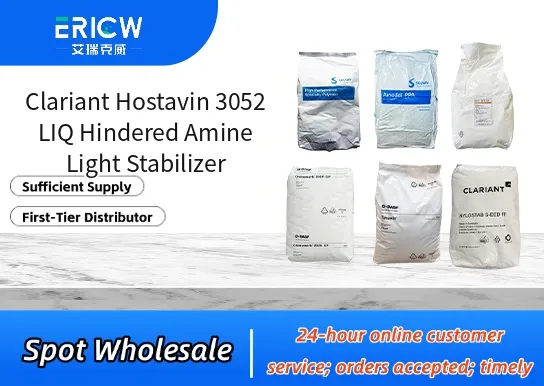
High-performance liquid hindered amine light stabilizer (HALS) with excellent compatibility in polar and non-polar polymer systems.
Low volatility and superior thermal stability, enabling efficient stabilization during high-temperature processing such as extrusion and injection molding.
Non-migrating formulation ensures long-term surface protection and reduced blooming risk in demanding outdoor applications.
Designed for synergistic performance with UV absorbers and antioxidants, enhancing overall photostabilization efficiency.
Eco-preferred profile: REACH-compliant, non-halogenated, and free of heavy metals or restricted phthalates.
Polyolefin-based agricultural films requiring extended UV resistance under intense sunlight exposure.
Automotive interior components including PP and TPO trim parts exposed to solar radiation through glass.
Outdoor furniture and garden products made from polypropylene, HDPE, or recycled polyolefin blends.
Coated and laminated packaging films where clarity, color retention, and surface integrity are critical.
Geotextiles and construction membranes subjected to prolonged outdoor weathering and UV degradation.
| Chemical Type | Hindered amine light stabilizer (HALS), tetramethylpiperidine derivative |
| Product Form | Clear to pale yellow liquid |
| Appearance | Homogeneous, low-viscosity liquid at 25 °C |
| Primary Applications | Polyolefins (PP, PE), TPOs, engineering plastics, coatings, and adhesives |
| Key Features | Excellent solubility in monomers and polymers; low volatility; hydrolytically stable |
| Benefits | Extended service life, improved color retention, reduced surface cracking and chalking |
| Regulatory Status | REACH registered; compliant with EU Directive 2002/61/EC for HALS in plastics |
| Storage Conditions | Store in original sealed container at 5–30 °C; protect from direct sunlight and moisture |
Q1: What is the primary function of Hostavin 3052 LIQ in polymer formulations?
A: Hostavin 3052 LIQ is a liquid hindered amine light stabilizer (HALS) designed to protect polymers—especially polyolefins, styrenics, and engineering plastics—against photo-oxidative degradation caused by UV radiation and thermal stress during processing and long-term service life.
Q2: How does the liquid form of Hostavin 3052 LIQ benefit manufacturing processes?
A: Its low-viscosity liquid format enables homogeneous dispersion without pre-dilution or melting steps, supports direct dosing into extruders or mixers, improves handling safety compared to powders, and reduces dust generation—making it especially suitable for high-speed compounding and masterbatch production.
Q3: Is Hostavin 3052 LIQ compatible with other common additives such as antioxidants or UV absorbers?
A: Yes, Hostavin 3052 LIQ exhibits good compatibility with phenolic antioxidants, phosphites, and benzotriazole-type UV absorbers. Synergistic stabilization effects are often observed when combined with primary antioxidants, though compatibility should be verified experimentally within the specific polymer matrix and processing conditions.
Q4: What types of polymers is Hostavin 3052 LIQ most commonly used in?
A: It is widely applied in polypropylene (PP), polyethylene (PE), thermoplastic elastomers (TPEs), ABS, and polycarbonate blends—particularly where clarity, long-term outdoor stability, or melt-processing robustness are required.
Q5: What is the typical dosage range for Hostavin 3052 LIQ in finished products?
A: Dosage depends on formulation requirements, exposure conditions, and polymer type, but it is typically used at low concentrations—generally ranging from 0.1% to 2% by weight—with optimal performance often achieved between 0.2% and 1.0% in standard applications.
Contact With Us:
E-mail: wangxingqiang@ericwchem.com
Have a Questions? Call Us:
Add:
Building A1, Jiete Industrial Park, Huangpu District, Guangzhou City, Guangdong Province, China