English
 Español
 tiếng việt
 русский
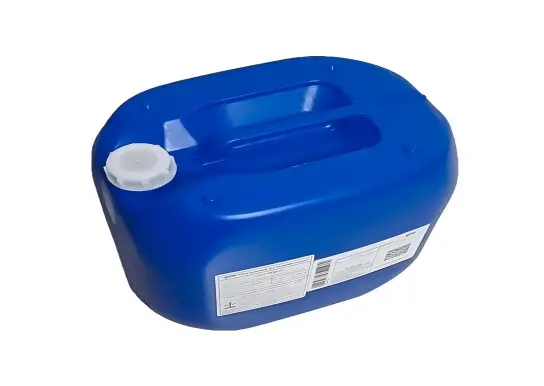
The Croda Hypermer KD Dispersant series delivers high-performance polymeric dispersants tailored for demanding industrial applications. Engineered with optimized molecular architectures, these agents enable stable particle dispersion across solvent-based systems while maintaining low processing viscosity and enhanced rheological control. Their formulations support high solids loading (exceeding 60% in select grades) without compromising flow properties, improving production efficiency in electronics, ceramics, and catalyst coatings.
The series offers both ionic and non-ionic variants to ensure compatibility with polar/non-polar solvents, resins, and advanced substrates. Applications span energy storage materials, nanomaterial synthesis, and precision coatings where thermal stability (<400°C) and ash-free decomposition.
Advanced Stabilization Technology: Prevents particle agglomeration and flocculation, ensuring long-term dispersion stability in harsh conditions.
Clean Burnout Performance: Formulated to minimize residue during sintering, critical for high-purity applications like electronics and ceramics.
Broad Compatibility: Effective for both inorganic (e.g., glass粉, alumina) and organic pigments, with versatility across solvent-based and polar/non-polar systems.
Enhanced Optical Properties: Improves gloss, transparency, and hiding power in coatings and inks by optimizing particle dispersion
Eco-Friendly Formulations: Free of VOC, solvents, and PEO, aligning with sustainable manufacturing requirements.
Electronics & Ceramics: Dispersion of high-purity materials (e.g., alumina, nitrides) for semiconductor and advanced ceramic production
Coatings & Inks: Stabilizes pigments and fillers in industrial and architectural coatings, ensuring color consistency and durability
Composites: Enhances uniformity in composite materials by preventing particle settling
Specialty Chemicals: Used in demanding solvent-based formulations for adhesives, sealants, and engineered plastics
| Model | Chemical Type | Primary Function |
| Hypermer KD16 | Anionic polymeric dispersant | Stabilizes solvent-based dispersions |
| Hypermer KD22 | Anionic polymeric dispersant | Stabilizes solvent-based dispersions, reduces agglomeration |
| Hypermer KD24 | Non-ionic polymeric dispersant | Stabilizes particulates in solvent/aqueous systems |
| Hypermer KD14 | Anionic polymeric dispersant | Stabilizes solvent-based dispersions, reduces agglomeration |
| Hypermer KD11 | Cationic polymeric dispersant | Enhances solvent-based dispersion stability |
| Hypermer KD4 | Anionic polymeric dispersant | Stabilizes solvent-based dispersions, reduces agglomeration |
| Hypermer KD2 | Cationic polymeric dispersant | Enhances solvent-based dispersion stability |
| Hypermer KD7 | Cationic polymeric dispersant | Enhances solvent-based dispersion stability |
| Hypermer KD57 | Polymeric dispersant | Enhances dispersion stability, reduces viscosity |
| Hypermer KD23 | Polymeric dispersant | Enhances dispersion stability, prevents agglomeration |
Q1: What types of pigments and fillers is Hypermer KD Dispersant most effective with?
A: Hypermer KD Dispersant is especially effective with inorganic pigments such as titanium dioxide, iron oxides, and carbon black, as well as functional fillers like calcium carbonate and silica. Its molecular architecture provides strong anchoring and steric stabilization in both aqueous and solvent-based systems.
Q2: Can Hypermer KD Dispersant be used in waterborne coatings without compromising stability or film formation?
A: Yes — Hypermer KD Dispersant is formulated to deliver excellent colloidal stability in waterborne acrylic, polyurethane, and hybrid systems. It helps reduce viscosity, improve pigment grind efficiency, and supports long-term storage stability without interfering with coalescence or film integrity.
Q3: How does Hypermer KD Dispersant compare to traditional polymeric dispersants in terms of dosage and efficiency?
A: Hypermer KD Dispersant typically delivers high efficiency at lower dosage levels compared to many conventional polymeric dispersants, due to its optimized balance of anchor groups and solvating chains. Dosage generally ranges from 0.1% to 2% by weight relative to pigment, depending on pigment surface area and formulation complexity.
Q4: Is Hypermer KD Dispersant compatible with common rheology modifiers and biocides used in industrial coatings?
A: Yes — Hypermer KD Dispersant demonstrates broad compatibility with associative and non-associative thickeners (e.g., HEUR, HEC), as well as standard isothiazolinone and benzisothiazole biocides. Compatibility should always be confirmed under actual formulation conditions and shear history.
Contact With Us:
E-mail: wangxingqiang@ericwchem.com
Have a Questions? Call Us:
Add:
Building A1, Jiete Industrial Park, Huangpu District, Guangzhou City, Guangdong Province, China