English
 Español
 tiếng việt
 русский
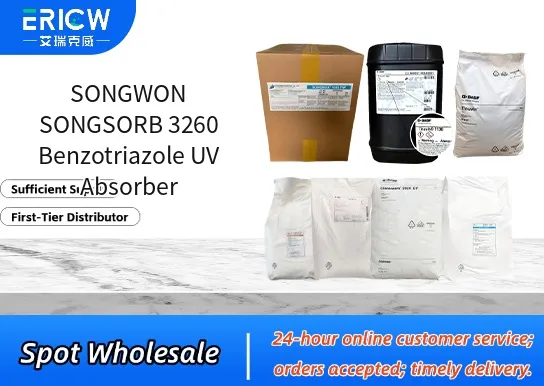
Highly effective UV absorption in the critical 290–400 nm range, protecting polymers from photodegradation.
Excellent thermal and hydrolytic stability, ensuring consistent performance during high-temperature processing and long-term service life.
Low volatility and minimal migration, providing durable protection in thin-film and flexible applications.
Good compatibility with a wide range of thermoplastics, including polyolefins, engineering plastics, and elastomers.
Non-discoloring and chemically inert under normal processing conditions, preserving product aesthetics and integrity.
Polyolefin films and agricultural mulch films requiring extended outdoor UV resistance.
Automotive interior components such as dashboards, trim, and seating foams exposed to sunlight.
Coatings and inks for outdoor signage, packaging, and industrial labeling.
Wire and cable insulation materials subjected to weathering and UV exposure.
Thermoplastic elastomers (TPEs) used in consumer goods and outdoor equipment.
| Chemical Type | Benzotriazole derivative |
| Product Form | Free-flowing white to off-white powder |
| Appearance | Crystalline powder |
| Molecular Weight (approx.) | 357 g/mol |
| Melting Point | 138–142 °C |
| Solubility | Soluble in common organic solvents (e.g., chloroform, THF); low solubility in water |
| Primary Applications | Polyolefins, engineering plastics, coatings, elastomers |
| Key Features | UV stabilization, thermal stability, low volatility, non-staining |
Q1: What is the primary function of SONGSORB 3260 in polymer systems?
A: SONGSORB 3260 is a benzotriazole-based ultraviolet light absorber designed to protect organic materials—particularly polymers—from photochemical degradation caused by UV radiation. It functions by absorbing harmful UV energy in the 290–400 nm range and dissipating it as low-level heat, thereby preserving color, mechanical integrity, and surface appearance during outdoor exposure.
Q2: In which polymer types is SONGSORB 3260 commonly used?
A: SONGSORB 3260 demonstrates good compatibility and performance in a wide range of thermoplastics and thermosets, including polyolefins (PP, PE), engineering plastics (ABS, PC, PA), PVC, and certain coatings and adhesives. Its thermal stability and low volatility support use in high-temperature processing such as extrusion and injection molding.
Q3: How does SONGSORB 3260 compare to hydroxyphenyltriazine or hindered amine light stabilizers (HALS)?
A: As a UV absorber, SONGSORB 3260 acts primarily by screening UV radiation before it initiates degradation, whereas HALS function as radical scavengers that interrupt degradation pathways after initiation. These mechanisms are complementary, and SONGSORB 3260 is often used synergistically with HALS to provide enhanced long-term stabilization—especially in demanding outdoor applications.
Q4: Is SONGSORB 3260 suitable for applications requiring regulatory compliance for food contact or consumer goods?
A: SONGSORB 3260 is formulated for industrial polymer stabilization and is not pre-approved for direct food-contact applications under major global regulatory frameworks. Customers intending use in regulated markets should consult local regulatory requirements and conduct appropriate safety and migration assessments based on final formulation and application conditions.
Q5: What is the typical dosage range for effective UV protection with SONGSORB 3260?
A: Effective dosage depends on polymer type, thickness, expected UV exposure intensity, and presence of other additives. It is typically used at low concentrations—generally ranging from 0.1% to 2% by weight—and optimized through application-specific testing and weathering evaluation.
Contact With Us:
E-mail: wangxingqiang@ericwchem.com
Have a Questions? Call Us:
Add:
Building A1, Jiete Industrial Park, Huangpu District, Guangzhou City, Guangdong Province, China