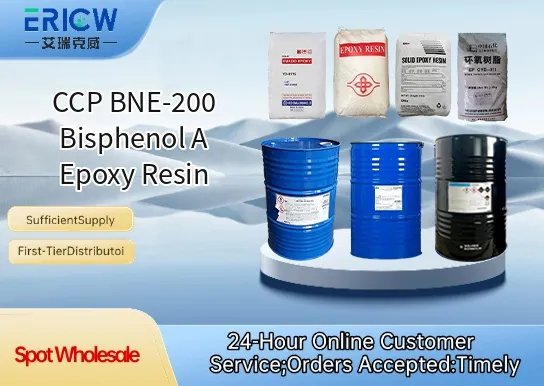
Features Of DOW DER662E Solid Epoxy Resin
High-purity composition - Ensures consistent coating quality
Superior chemical resistance - Withstands aggressive environments
Excellent adhesion - Bonds strongly to multiple substrates
Thermal stability - Performs reliably at elevated temperatures
Processing versatility - Easy to incorporate in formulations
Typical Applications Of DOW DER662E Solid Epoxy Resin
Industrial maintenance coatings - For chemical plants and refineries
Marine and offshore coatings - Protection against saltwater corrosion
Pipeline coatings - Long-term underground protection
Tank linings - Chemical storage solutions
Power plant coatings - High-temperature resistance
Specifications Of DOW DER662E Solid Epoxy Resin
| Epoxy Equivalent Weight | g/eq | 700-750 |
| Viscosity at 25°C | cP | 12,000-16,000 |
| Melting Point | °C | 70-80 |
| Gardner Color | - | ≤2 |
| Hydrolyzable Chloride | ppm | ≤500 |
| Softening Point | °C | 75-85 |
| Density at 25°C | g/cm³ | 1.17-1.19 |
| Flash Point | °C | >200 |
DOW DER662E Solid Epoxy Resin – Frequently Asked Questions (FAQ)
Q1: What is the typical physical form and handling characteristics of DOW DER662E?
A: DOW DER662E is supplied as off-white to light tan solid flakes or pellets. It exhibits good flowability and low dust generation during handling, making it suitable for automated feeding systems in industrial compounding operations.
Q2: How does DOW DER662E differ from liquid epoxy resins in formulation applications?
A: As a solid resin with higher molecular weight, DER662E offers lower volatility, improved thermal stability, and reduced formulation viscosity sensitivity compared to low-molecular-weight liquid epoxies. It is commonly selected when enhanced melt stability or reduced VOC content is required during processing.
Q3: Is DOW DER662E suitable for use in food-contact or pharmaceutical packaging applications?
A: DOW DER662E is not pre-approved for direct food-contact applications. Its suitability depends on final formulation, processing conditions, and regulatory review by end-use authorities. Customers must conduct full compliance assessments—including migration testing and regulatory dossier evaluation—before use in regulated segments.
Q4: What types of curing agents are commonly used with DOW DER662E?
A: DER662E is compatible with a broad range of amine, anhydride, phenolic, and catalytic curing agents. Selection depends on the desired cure profile, glass transition temperature, and end-use performance requirements. Common partners include dicyandiamide (DICY), aromatic amines, and latent imidazole catalysts.
Q5: Can DOW DER662E be blended with other epoxy resins or polymers?
A: Yes, DER662E is frequently blended with other solid or liquid epoxy resins to tailor melt viscosity, crystallinity, toughness, and crosslink density. Compatibility with thermoplastics such as polyethersulfone (PES) or polyetherimide (PEI) has also been demonstrated in high-performance alloy formulations.
 English
 Español
 tiếng việt
 русский