English
 Español
 tiếng việt
 русский
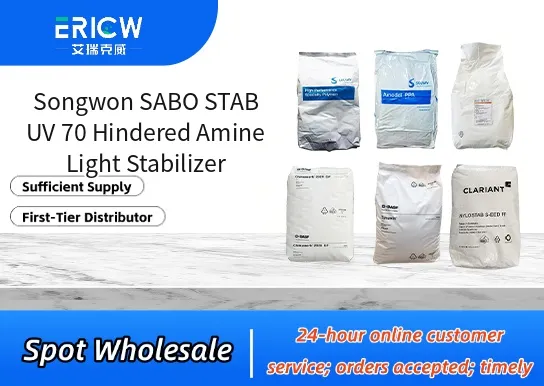
High-performance hindered amine light stabilizer (HALS) offering exceptional long-term UV protection in polyolefins and engineering plastics.
Low volatility and excellent thermal stability, ensuring minimal loss during high-temperature processing such as extrusion and injection molding.
Non-migrating molecular structure provides outstanding permanence and resistance to extraction in demanding environments.
Compatible with common antioxidants (e.g., Irganox 1010), pigments, and other additives without adverse interactions.
Meets stringent regulatory requirements including FDA 21 CFR §178.2010 for food-contact applications (subject to compliance verification).
Polypropylene (PP) automotive interior parts exposed to sunlight and elevated cabin temperatures.
HDPE and LDPE agricultural films requiring extended outdoor service life under intense UV radiation.
PP and PE geotextiles and geomembranes used in civil engineering and landfill liner systems.
Outdoor furniture, garden containers, and building profiles made from stabilized polyolefin compounds.
Blown and cast films for packaging where clarity retention and color stability are critical.
| Chemical Type | Tetramethylpiperidine-based hindered amine light stabilizer (HALS) |
| Product Form | Free-flowing white to off-white granules |
| Appearance | Uniform granular solid, no visible dust or agglomerates |
| Molecular Weight (approx.) | 500–600 g/mol |
| Melting Range | 115–125 °C |
| Primary Applications | Polyolefins (PP, HDPE, LDPE), engineering thermoplastics (PA, PBT) |
| Key Features | Low volatility, non-basic HALS, high compatibility, hydrolysis-resistant |
| Benefits | Extended outdoor lifetime, reduced surface cracking & chalking, improved color retention |
Q1: What is the primary mechanism of action for SABO STAB UV 70?
A: SABO STAB UV 70 functions as a hindered amine light stabilizer (HALS) by forming stable nitroxyl radicals that scavenge damaging alkyl radicals generated during photo-oxidation. It also regenerates catalytically through cyclic denitrosation and re-oxidation pathways, providing long-term stabilization without being consumed rapidly.
Q2: In which polymer systems is SABO STAB UV 70 most commonly used?
A: It is widely applied in polyolefins—including PP and HDPE—especially in outdoor applications such as agricultural films, geotextiles, automotive interior components, and building materials. Its compatibility and low volatility also support use in engineering thermoplastics like PA and PBT where thermal processing stability is required.
Q3: How does SABO STAB UV 70 compare to conventional UV absorbers like benzophenones or benzotriazoles?
A: Unlike UV absorbers that dissipate energy as heat after absorbing UV radiation, HALS like SABO STAB UV 70 act primarily in the polymer matrix by interrupting degradation chain reactions. This makes it especially effective in thick sections or pigmented systems where UV light penetration is limited—and it often delivers superior long-term weathering performance when used alone or synergistically with UV absorbers.
Q4: Is SABO STAB UV 70 suitable for food-contact or medical-grade applications?
A: SABO STAB UV 70 is not pre-approved for direct food-contact or implantable medical applications. Its suitability for regulated end uses depends on full formulation evaluation, including migration testing and compliance with applicable regional regulatory frameworks. Customers must verify compliance through their own due diligence and regulatory consultation.
Q5: What is the typical dosage range for optimal performance?
A: Dosage depends on polymer type, processing conditions, and end-use exposure requirements, but SABO STAB UV 70 is typically used at low concentrations—generally ranging from 0.1% to 2% by weight—with many applications achieving excellent results within the 0.2–0.8% range.
Contact With Us:
E-mail: wangxingqiang@ericwchem.com
Have a Questions? Call Us:
Add:
Building A1, Jiete Industrial Park, Huangpu District, Guangzhou City, Guangdong Province, China