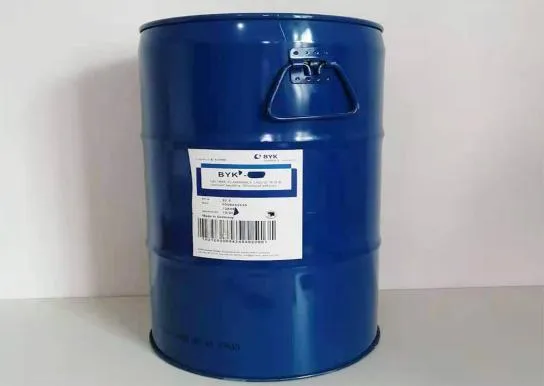
Features Of BYK-1693 Defoamer
Formulated for Specific Systems: Tailored to perform effectively in solvent-based systems and pigment concentrates, ensuring strong compatibility with these formulations.
Steric Hindrance Mechanism: Utilizes steric hindrance to break down pigment flocculates, preventing agglomeration and promoting uniform dispersion of pigments.
Enhances Critical Properties: Improves gloss for a more polished finish, boosts color strength for vibrant and consistent hues, and enhances flowability for smoother processing and application.
Typical Applications Of BYK-1693 Defoamer
Industrial Coatings: Enhances pigment dispersion in industrial coatings, improving gloss and color consistency for durable, high-quality finishes.
Automotive Refinishes & OEM Automotive Coatings: Optimizes pigment performance in automotive coatings, ensuring high gloss, uniform color strength, and smooth application.
Coil Coatings: Improves flowability and pigment dispersion in coil coatings, contributing to even, flawless finishes on metal coils.
Specifications Of BYK-1693 Defoamer
Chemical Composition | High - molecular - weight block copolymer solution with pigment - affinic groups |
Solvent | Xylene / butyl acetate / propylene glycol methyl ether acetate (specific ratio not given) |
Non - Volatiles | Around 45% |
Amine Value | 10mg KOH / g |
Storage and transportation | Must be stored and transported at temperatures below 40 °C |
BYK-1693 Defoamer_copy20250812 – Frequently Asked Questions (FAQ)
Q1: What types of coating systems is BYK-1693 Defoamer_copy20250812 especially suited for?
A: BYK-1693 Defoamer_copy20250812 is formulated for use in waterborne architectural and industrial coatings, including acrylic, vinyl-acrylic, and styrene-acrylic dispersions. It demonstrates reliable performance in both low- and high-solids formulations where efficient air release and foam suppression are required during manufacturing and application.
Q2: How should BYK-1693 Defoamer_copy20250812 be incorporated into a formulation?
A: It is recommended to add BYK-1693 Defoamer_copy20250812 during the let-down or post-addition stage, after pigments and fillers have been dispersed. This helps avoid destabilizing the pigment dispersion while ensuring optimal defoaming action in the final system. Stirring at moderate speed ensures uniform distribution without reintroducing air.
Q3: Does BYK-1693 Defoamer_copy20250812 affect gloss or film appearance?
A: When used within the recommended dosage range, BYK-1693 Defoamer_copy20250812 typically does not negatively impact gloss retention or cause surface defects such as craters or haze. Its compatibility with common waterborne resins supports stable film formation and visual clarity in finished coatings.
Q4: Can BYK-1693 Defoamer_copy20250812 be used in combination with other additives?
A: Yes, BYK-1693 Defoamer_copy20250812 is generally compatible with common rheology modifiers, wetting agents, and dispersants used in waterborne systems. However, due to the complexity of additive interactions, compatibility testing under actual formulation conditions is advised before full-scale implementation.
 English
 Español
 tiếng việt
 русский