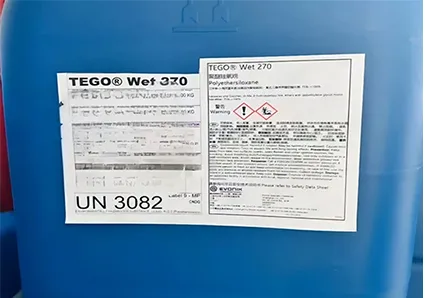
Clariant Dispersogen PL30 is an anionic polyacrylate-based dispersant specifically formulated for inorganic pigment and filler systems. The product's molecular structure provides optimal electrostatic stabilization for mineral-based colorants, particularly in cost-sensitive exterior coating applications. Its unique charge density characteristics enable efficient viscosity reduction during the grinding process while maintaining excellent shelf stability in finished formulations.
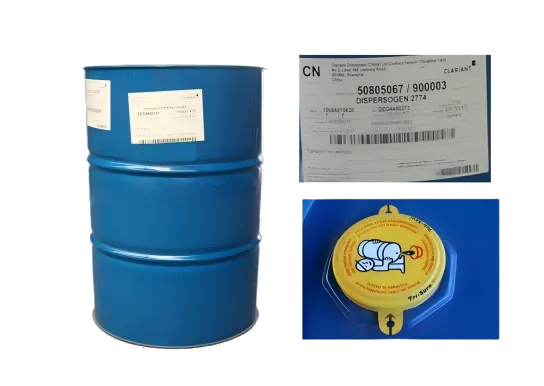
Mineral Pigment Optimization - Tailored for TiO₂, iron oxides and extenders
Process Efficiency - Significant viscosity reduction during dispersion
Long-Term Stability - Prevents hard settling in storage
Formulation Flexibility - Compatible with various binder chemistries
Economic Advantage - Cost-effective solution for exterior coating
Exterior Architectural Coatings - Weather-resistant facade paints
Industrial Maintenance Coatings - Protective coatings for metal substrates
Concrete Coatings - Decorative and protective floor finishes
Paper Coatings - Mineral-filled paper coatings
Construction Adhesives - Pigmented adhesive systems
Chemical Name | Sodium Polyacrylate |
Appearance | Colorless to Light Yellow Liquid |
Brand | Clariant |
Model | Dispersogen PL30 |
Active Content | 30% |
Ionic Nature | Anionic |
Recommended Dosage | 0.3-0.8% (relative to pigment) |
Packaging | 200kg/drum |
Origin | China |
Q1: What is the primary function of Dispersogen PL 30 in pigment dispersion systems?
A: Dispersogen PL 30 is an anionic polyacrylate dispersant designed to stabilize pigment particles in aqueous systems by providing electrostatic and steric stabilization. It helps prevent agglomeration, improves color strength, enhances gloss, and supports long-term storage stability in coatings, inks, and construction applications.
Q2: Is Dispersogen PL 30 suitable for use in high-solids or low-VOC formulations?
A: Yes — as a water-based, non-volatile polymer dispersant, Dispersogen PL 30 supports the development of low-VOC and high-solids formulations. It contributes minimal volatile content and remains effective in systems where solvent reduction is a key objective.
Q3: How does Dispersogen PL 30 compare to non-ionic or phosphate-based dispersants in terms of compatibility with hard water or multivalent ions?
A: As an anionic polyacrylate, Dispersogen PL 30 may exhibit reduced performance in the presence of high concentrations of calcium, magnesium, or other multivalent cations. Its effectiveness is generally optimized in moderately soft to neutral pH aqueous systems; formulation adjustments or co-additives may be considered for challenging water conditions.
Q4: What is the typical dosage range for Dispersogen PL 30 in standard aqueous pigment pastes?
A: Dosage depends on pigment type, loading, and desired rheology, but it is typically used at low concentrations — generally ranging from 0.1% to 2% by weight relative to pigment solids. Optimal dosage should be determined experimentally for each specific formulation.
Contact With Us:
E-mail: wangxingqiang@ericwchem.com
Have a Questions? Call Us:
Add:
Building A1, Jiete Industrial Park, Huangpu District, Guangzhou City, Guangdong Province, China
 English
 Español
 tiếng việt
 русский