English
 Español
 tiếng việt
 русский
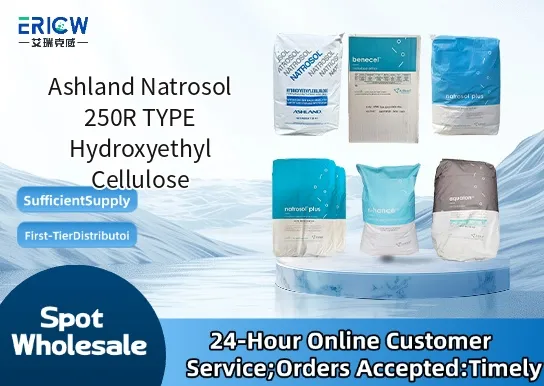
Ashland NATROSOL 250MHBR is a high - performance non - ionic hydroxyethyl cellulose thickener, tailored for water - based coatings, inks, detergents, cosmetics and other scenarios. It is grayish - white or beige fine particles, prepared by the reaction of cellulose with ethylene oxide, MS≈2.5, easily dispersible and soluble in cold water, which can strongly regulate rheology
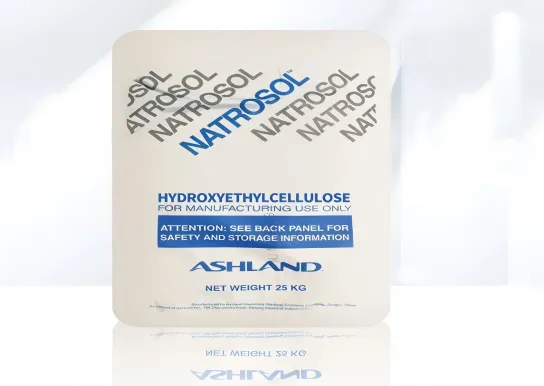
Efficient Rheology Control - Strongly thickens and accurately controls system rheology, providing excellent anti - sagging property and pigment anti - settling property
Cold Water Solubility and Easy Processing - Fine particles are easy to disperse and dissolve, suitable for various feeding processes, shortening the preparation cycle
Wide - range Stability and Compatibility - Tolerant to pH 2-12 and electrolytes, well compatible with surfactants/pigments and fillers, with stable performance
Excellent Biological Stability - Resistant to enzymatic hydrolysis, stable viscosity during long - term storage, ensuring long - term stability of the system
Water - based Coatings - Thickens latex paints/stone - like paints, enhances anti - sagging property and workability, and improves color development and storage stability
Daily Chemical Products - Thickens shampoos/creams, improves texture and stability, and enhances application skin feel
Printing Inks - Thickens and suspends water - based inks, prevents pigment precipitation, and ensures printing uniformity
Building Materials Additives - Retains water and thickens mortar/tile adhesives, improves bonding strength and workability
| Brand | Ashland (USA) |
| Chemical Name | Hydroxyethyl Cellulose (HEC) |
| CAS No. | 9004-62-0 |
| Chemical Type | Non-ionic hydrophilic cellulose derivative |
| Appearance | Grayish-white or beige fine particles |
| Molar Substitution (MS) | ≈2.5 |
| pH Value | 6.0-8.5 |
| Density | 1.38 g/cm³ |
| Bulk Density | 700 kg/m³ |
| Water Solubility | Soluble, easily dispersible in cold water |
| Lower Explosive Limit | 30 g/m³ |
| Autoignition Temperature | 460°C |
Contact With Us:
E-mail: wangxingqiang@ericwchem.com
Have a Questions? Call Us:
Add:
Building A1, Jiete Industrial Park, Huangpu District, Guangzhou City, Guangdong Province, China