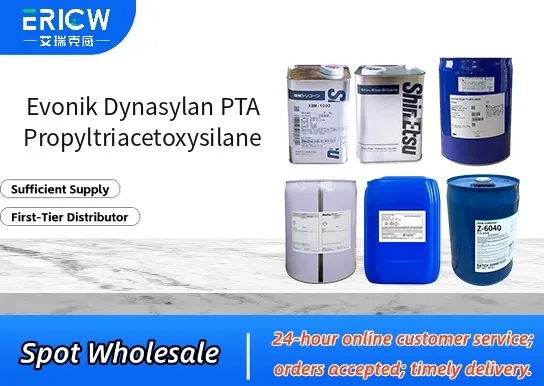
Features Of Dow Corning Silane Coupling Agent
Superior Adhesion Performance: Enhances bonding strength between coatings and various substrates, including metals and composites, even under wet conditions
Mechanical Enhancement: Improves tensile strength, tear resistance, and wear durability of polymer composites and coatings
Chemical & Environmental Resistance: Offers excellent water, chemical, and UV resistance, ensuring long-term durability in harsh conditions
Efficient Processing: Fast curing at ambient or elevated temperatures, optimizing production timelines
Sustainable Formulation: Low-VOC, eco-compliant design suitable for industrial and construction applications
Typical Applications Of Dow Corning Silane Coupling Agent
Infrastructure Protection: Waterproofing for commercial buildings, bridges, and highways, extending service life
Industrial Coatings: Anti-corrosion treatments for metal surfaces and durable coatings for parking structures
Composite Materials: Surface treatment for glass fibers and filler modification in polyolefins to enhance mechanical properties
Electrical Systems: Insulation and sheathing for wires/cables, improving electrical and thermal performance
Specifications Of Dow Corning Silane Coupling Agent
| Model | Chemical Name | Appearance | Flash Point (Closed Cup) |
| OFS6062 | γ-Glycidoxypropyltrimethoxysilane | Colorless to light yellow liquid | >101℃ |
| OFS-6778 | Silane Coupling Agent | Transparent | >93.8℃ |
| OFS6070 | γ-Glycidoxypropyltrimethoxysilane | Colorless to light yellow liquid | >101℃ |
| OFS6610 | γ-Glycidoxypropyltrimethoxysilane | Colorless to light yellow liquid | >101℃ |
| OFS6300 | Vinyltrimethoxysilane | Colorless to light yellow liquid | 22℃ |
| OFS6403 | Isobutyltriethoxysilane | Transparent | 62℃ |
| OFS6030 | Methacryloxypropyltrimethoxysilane | White to light yellow liquid | 138℃ |
| OFS-6341 | Octyltriethoxysilane | Transparent | 63℃ |
| OFS6124 | Epoxy Silane | Colorless to light yellow liquid | >101℃ |
| OFS6678 | γ-Glycidoxypropyltrimethoxysilane | Colorless to light yellow liquid | >101℃ |
Dow Corning Silane Coupling Agent – Frequently Asked Questions (FAQ)
Q1: What is the primary function of Dow Corning silane coupling agents in composite formulations?
A: These silanes act as molecular bridges between inorganic fillers (e.g., silica, glass, minerals) and organic polymer matrices (e.g., silicones, epoxies, polyurethanes), enhancing interfacial adhesion, improving mechanical properties, and promoting dispersion stability.
Q2: How should Dow Corning silane coupling agents be handled and stored to maintain performance?
A: Store in tightly sealed original containers under cool, dry conditions, away from moisture, heat, and direct sunlight. Once opened, minimize exposure to ambient humidity; hydrolyzed solutions should be used promptly or stabilized per application guidance.
Q3: Can these silanes be used in both solvent-based and solvent-free systems?
A: Yes — they are compatible with a broad range of processing environments, including solvent-based coatings, aqueous dispersions, and high-solids or 100% reactive formulations, though hydrolysis behavior and compatibility must be verified for each specific system.
Q4: What factors influence the optimal dosage level in a given formulation?
A: Dosage depends on filler surface area, reactivity, matrix chemistry, and desired performance balance — typically used at low concentrations, generally ranging from 0.1% to 2% by weight relative to filler. Pilot-scale evaluation is recommended to determine the most effective level.
Q5: Are Dow Corning silane coupling agents suitable for high-temperature curing processes?
A: Yes — many grades exhibit thermal stability sufficient for common curing profiles used in composites, coatings, and adhesives, including those above 150°C. However, selection should consider the specific silane’s alkoxy group and intended end-use temperature exposure.
 English
 Español
 tiếng việt
 русский