English
 Español
 tiếng việt
 русский
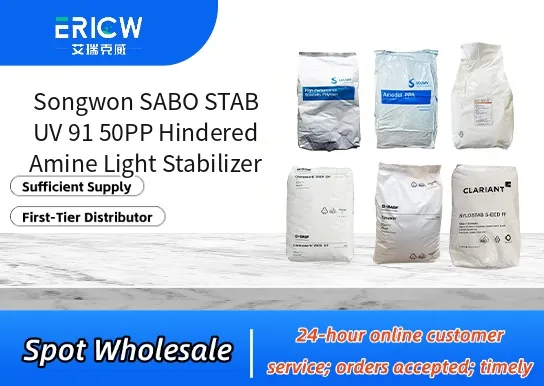
High-performance hindered amine light stabilizer (HALS) with exceptional long-term UV protection for polyolefins.
Optimized for polypropylene (PP) applications, offering superior resistance to photo-oxidative degradation under intense sunlight exposure.
Low volatility and excellent thermal stability, enabling stable performance during high-temperature processing such as extrusion and injection molding.
Good compatibility with common PP resins and synergistic effects when combined with UV absorbers or phosphites.
Non-migrating formulation ensures consistent surface protection and reduced blooming risk in demanding outdoor applications.
Automotive interior and exterior components (e.g., bumpers, trim, dashboards).
Outdoor polypropylene fibers and geotextiles exposed to prolonged solar radiation.
Consumer goods including garden furniture, storage containers, and automotive battery cases.
Industrial packaging films and woven sacks requiring extended UV resistance.
Rotomolded PP tanks and water storage systems used in outdoor environments.
| Chemical Type | Hindered amine light stabilizer (HALS), tetramethylpiperidine derivative |
| Product Form | Pellets (50% active HALS in polypropylene carrier) |
| Appearance | Off-white to light beige cylindrical pellets |
| Primary Applications | Polypropylene (PP) homopolymers and copolymers |
| Key Features | UV stabilization, thermal stability, low volatility, non-blooming |
| Recommended Loading Level | 0.1–0.5 wt% (based on final polymer weight) |
| Processing Compatibility | Suitable for extrusion, injection molding, fiber spinning, and rotomolding |
| Storage Conditions | Store in cool, dry place; keep container tightly closed |
Q1: What is the primary function of SABO STAB UV 91 50PP in polymer systems?
A: SABO STAB UV 91 50PP is a hindered amine light stabilizer (HALS) designed to protect polymers from photo-oxidative degradation caused by UV radiation and atmospheric oxygen. It acts primarily through a regenerative radical scavenging mechanism, providing long-term stabilization without significant discoloration or volatility issues.
Q2: Which polymer types is SABO STAB UV 91 50PP most commonly used with?
A: This HALS is especially effective in polyolefins such as PP and HDPE, and is also widely applied in engineering thermoplastics including PA, ABS, and PC blends. Its compatibility and performance make it suitable for both thin-section and thick-section applications exposed to outdoor conditions.
Q3: How does the 50% active content in a polymeric carrier affect processing and performance?
A: The 50% concentration in a polymeric carrier improves handling, dust control, and dispersion during compounding. It enhances thermal stability during melt processing and reduces volatility loss compared to low-molecular-weight HALS, supporting more consistent stabilization performance over the product’s service life.
Q4: Can SABO STAB UV 91 50PP be used in combination with other UV absorbers or antioxidants?
A: Yes — it is frequently synergistic with UV absorbers (e.g., benzotriazoles or benzophenones) and phenolic or phosphite antioxidants. Such combinations provide complementary protection mechanisms, extending service life in demanding outdoor applications. Compatibility testing under intended processing and end-use conditions is recommended.
Q5: What are typical dosage guidelines for SABO STAB UV 91 50PP in standard formulations?
A: Dosage depends on polymer type, expected exposure conditions, and co-additives, but it is typically used at low concentrations — generally ranging from 0.1% to 2% by weight. Optimal loading should be determined through application-specific weathering and aging studies.
Contact With Us:
E-mail: wangxingqiang@ericwchem.com
Have a Questions? Call Us:
Add:
Building A1, Jiete Industrial Park, Huangpu District, Guangzhou City, Guangdong Province, China