English
 Español
 tiếng việt
 русский
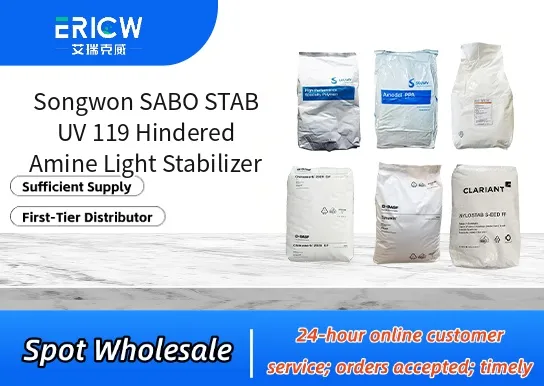
Highly effective long-term light stabilization for polyolefins and engineering plastics under intense UV exposure.
Excellent thermal stability up to 280 °C, enabling compatibility with high-temperature processing such as injection molding and extrusion.
Low volatility and minimal migration, ensuring persistent performance in thin-section and outdoor applications.
Synergistic compatibility with phenolic antioxidants and other UV absorbers (e.g., benzotriazoles) for enhanced protection systems.
Non-discoloring formulation—maintains clarity and color fidelity in transparent and pigmented polymers.
Automotive interior and exterior components including PP bumpers, dashboards, and trim parts.
Outdoor agricultural films and greenhouse covers requiring multi-season UV resistance.
Geotextiles and civil engineering membranes exposed to prolonged sunlight and weathering.
Packaging films for UV-sensitive contents, including food and pharmaceutical laminates.
Rotomolded polyethylene tanks, playground equipment, and garden furniture.
| Chemical Type | Tetramethylpiperidine-based hindered amine light stabilizer (HALS) |
| Product Form | Free-flowing white to off-white granules |
| Appearance | Uniform granular solid, no visible dust or agglomerates |
| Molecular Weight (approx.) | 537 g/mol |
| Melting Range | 125–135 °C |
| Volatile Matter (105 °C, 2 h) | ≤ 0.5 wt% |
| Ash Content | ≤ 0.1 wt% |
| Primary Applications | Polypropylene (PP), polyethylene (PE), ABS, PC/ABS blends, and thermoplastic elastomers (TPEs) |
Q1: What is the primary mechanism of action for SABO STAB UV 119?
A: SABO STAB UV 119 functions as a hindered amine light stabilizer (HALS) by forming stable nitroxyl radicals that scavenge damaging alkyl radicals generated during photo-oxidation. It also regenerates through cyclic denitroxylamine pathways, providing long-term stabilization without being consumed stoichiometrically.
Q2: In which polymer systems is UV 119 most commonly used?
A: UV 119 is widely applied in polyolefins—including PP and HDPE—especially in outdoor applications such as agricultural films, geotextiles, and automotive interior components. It is also compatible with certain engineering thermoplastics and elastomers where long-term UV resistance and low volatility are required.
Q3: How does UV 119 compare to traditional UV absorbers like benzophenones or benzotriazoles?
A: Unlike UV absorbers that dissipate energy by absorbing incident radiation, UV 119 acts catalytically in the polymer matrix to interrupt degradation pathways after photon absorption has occurred. This makes it particularly effective in thick sections or pigmented systems where UV absorbers may be less efficient due to limited penetration or interference.
Q4: Is UV 119 suitable for food-contact or potable water applications?
A: UV 119 is not currently listed under major food-contact regulatory frameworks such as FDA 21 CFR or EU Regulation (EC) No 1935/2004 for direct food-contact use. Its suitability for potable water applications depends on full system evaluation, including extraction behavior and local regulatory acceptance—consult Songwon technical support for application-specific compliance guidance.
Q5: What is the typical dosage range for optimal performance?
A: Dosage depends on polymer type, processing conditions, end-use exposure, and presence of other additives—but UV 119 is typically used at low concentrations, generally ranging from 0.1% to 2% by weight in polyolefin formulations.
Contact With Us:
E-mail: wangxingqiang@ericwchem.com
Have a Questions? Call Us:
Add:
Building A1, Jiete Industrial Park, Huangpu District, Guangzhou City, Guangdong Province, China