English
 Español
 tiếng việt
 русский
Clariant Hostastat FA14 is a light yellow liquid antistatic agent with dual functionality, serving as both an antistatic agent and a lubricant for plastics. It is easy to operate and can continuously migrate from the plastic matrix to the surface, maintaining long-term antistatic effects in PE (LDPE, HDPE) and PP. When used synergistically with antistatic agent FE2, it accelerates the onset of antistatic performance and also acts as a processing aid, especially suitable for plastic processing scenarios like BOPP film production.
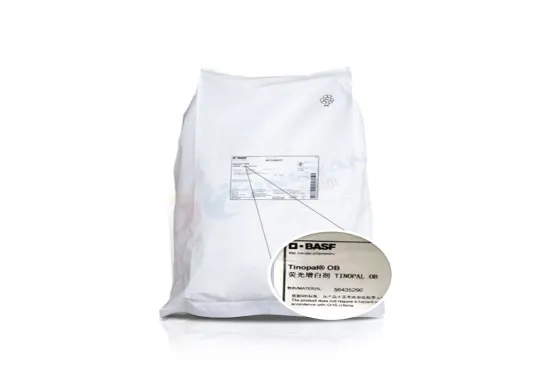
Dual Functionality: Delivers dual benefits of antistatic performance and lubrication for plastic materials
Long-Lasting Efficacy: Continuous migration to plastic surface ensures sustained antistatic protection
Synergistic Compatibility: Works synergistically with FE2 to accelerate antistatic effect
User-Friendly: Liquid form enables easy integration and operation in plastic processing workflows
PE (LDPE, HDPE): Serves as dual-purpose antistatic agent and processing aid
PP: Functions as antistatic agent and lubricant to ensure stable processing
BOPP Film Production: Acts as key processing aid with supplementary antistatic support
Long-Term Antistatic Scenarios: Ideal for PE/PP products requiring durable, long-lasting static control
Product Name | Clariant Hostastat FA14 |
Appearance | Light yellow liquid |
Viscosity | 30 mPa·s |
Density (50℃) | 0.9 g/cm³ |
Form | Liquid |
Core Function | Antistatic + Lubricant |
Recommended Dosage (PE/PP) | 0.1-0.15 phr |
Synergistic Partner | Antistatic agent FE2 |
Q1: What types of polymers is Hostastat FA14 compatible with?
A: Hostastat FA14 is primarily designed for use in polyolefins such as polypropylene (PP) and polyethylene (PE), including both homopolymers and copolymers. It demonstrates good compatibility and dispersion in these non-polar matrices and is also suitable for certain engineering thermoplastics where surface resistivity reduction is required without compromising mechanical properties.
Q2: How does Hostastat FA14 achieve antistatic performance in plastics?
A: Hostastat FA14 functions as an internal antistatic agent by migrating to the polymer surface during processing and service life. Its amphiphilic molecular structure enables it to orient at the air–polymer interface, where the hydrophilic moiety attracts ambient moisture—forming a conductive layer that dissipates static charge effectively under typical environmental conditions.
Q3: Is Hostastat FA14 suitable for applications requiring regulatory compliance for food contact or medical devices?
A: Hostastat FA14 is not pre-approved for direct food contact or medical device applications under major global regulatory frameworks. Customers intending to use it in regulated segments must conduct full application-specific assessments—including migration testing and toxicological evaluation—and obtain formal regulatory clearance based on final formulation, processing conditions, and end-use requirements.
Q4: What is the typical dosage range for Hostastat FA14 in polyolefin compounds?
A: Dosage depends on the base polymer, processing method, target surface resistivity, and environmental conditions. In most polyolefin applications, Hostastat FA14 is typically used at low concentrations—generally ranging from 0.1% to 2% by weight—with optimal performance often observed between 0.3% and 1.0%. Fine-tuning is recommended through laboratory-scale trials.
Q5: Does Hostastat FA14 affect the thermal stability or color of processed polymers?
A: Hostastat FA14 exhibits good thermal stability during standard polyolefin processing (e.g., extrusion, injection molding) and does not induce significant yellowing or discoloration under normal conditions. However, prolonged exposure to high temperatures or excessive shear may influence its performance; therefore, optimized processing parameters are advised to maintain consistent antistatic functionality and appearance.
Contact With Us:
E-mail: wangxingqiang@ericwchem.com
Have a Questions? Call Us:
Add:
Building A1, Jiete Industrial Park, Huangpu District, Guangzhou City, Guangdong Province, China