Lubrizol SOLSPERSE 32000 is a cutting-edge dispersant optimized for UV-curable systems, delivering superior pigment dispersion and faster curing performance. It enables high pigment loading while maintaining excellent stability in demanding UV applications.
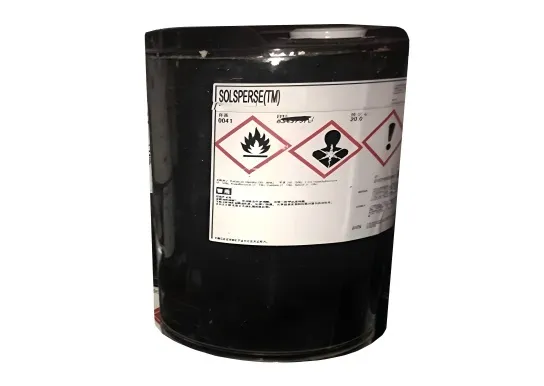
UV-Curing Efficiency - Accelerates curing by 30%
High Loading Capacity - Supports up to 40% pigment loading
Low-Viscosity Performance - Maintains optimal flow properties
Long-Term Stability - No grit formation after extended storage
Environmental Compliance - VOC-free and APEO-free
UV Printing Inks - Enhances curing speed and print quality
Decorative Coatings - Improves metallic effects and adhesion
Flexible Packaging - Boosts film adhesion and curing efficiency
3D Printing - Ensures stable pigment dispersion
Type | Acrylate-functional polymer |
Appearance | Amber viscous liquid |
Active Content | 100% |
Acid Value | ≤5 mg KOH/g |
Density (25°C) | 1.10-1.15 g/cm³ |
Viscosity (25°C) | 8,000-12,000 mPa·s |
Dynamic Particle Size (1% disp.) | ≤150 nm |
Dosage | 1.0%-3.5% (by pigment weight) |
Packaging | 200kg/galvanized steel drum |
Q1: What types of pigments and fillers is SOLSPERSE 32000 most effective with?
A: SOLSPERSE 32000 is specifically engineered for high-performance stabilization of organic pigments, carbon black, and inorganic oxides (e.g., titanium dioxide, iron oxides) in non-aqueous systems. It demonstrates strong affinity for polar pigment surfaces and delivers excellent wetting and long-term dispersion stability in demanding applications.
Q2: In which solvent- or resin-based systems is SOLSPERSE 32000 typically used?
A: This dispersant performs well in medium-to-high polarity media, including polyester, alkyd, acrylic, and polyurethane resins, as well as in aromatic and ketonic solvents. It is less suited for highly non-polar hydrocarbon systems without modification or co-additives.
Q3: How does SOLSPERSE 32000 contribute to improved millbase stability and final coating performance?
A: By providing steric stabilization and reducing interparticle attraction, SOLSPERSE 32000 helps maintain low viscosity during grinding, minimizes post-addition viscosity drift, and supports superior gloss, color strength, and resistance to settling or flocculation in finished coatings and inks.
Q4: What is the recommended addition method and timing for optimal performance?
A: For best results, SOLSPERSE 32000 should be added during the initial pigment wetting stage—typically before or concurrent with pigment incorporation into the vehicle. Pre-dilution in a compatible solvent or resin may improve uniform distribution, especially in high-viscosity systems.
Q5: Is SOLSPERSE 32000 suitable for use in low-VOC or high-solids formulations?
A: Yes—its efficient pigment stabilization allows formulators to reduce solvent demand and achieve higher solids content while maintaining grind stability and film quality. It supports formulation strategies aligned with modern environmental and performance targets.
Contact With Us:
E-mail: wangxingqiang@ericwchem.com
Have a Questions? Call Us:
Add:
Building A1, Jiete Industrial Park, Huangpu District, Guangzhou City, Guangdong Province, China
 English
 Español
 tiếng việt
 русский