English
 Español
 tiếng việt
 русский
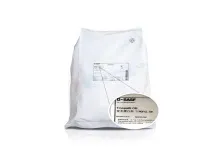
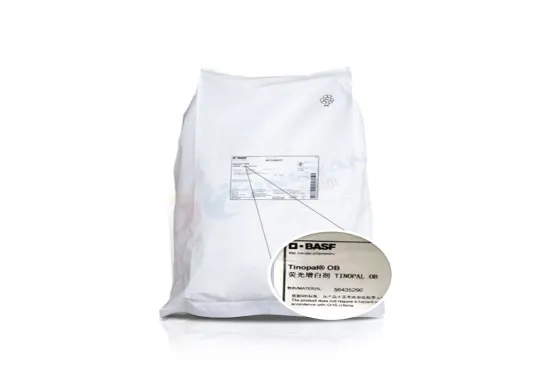
BASF LAROSTAT FPE S is an antistatic agent belonging to the amide type. It has a concentration of 60 and is dispersible in water. Presented in powder form and supported on silica, it is approved by standards like 175.105, 176.180, 177.2260, 177.2800, and 178.3130. This product is mainly applied in polyethylene and polypropylene materials to provide antistatic properties.
Dispersibility: Dispersible evenly in target materials during processing, ensuring uniform antistatic effect across the product
Powder & Silica-supported: Powder form with silica support for easy handling and better dispersion/stability in polymer matrices
Approval compliant: Meets multiple regulatory standards, ensuring reliability and safety for regulated industries
Amide-based advantage: Good compatibility with polyethylene and polypropylene, delivering effective and long-lasting antistatic performance
Polyethylene products: Applied to PE films, sheets and molded parts; eliminates static, prevents dust adsorption, and improves product quality for packaging/industrial use
Polypropylene products: Used in PP fibers, pipes and injection-molded components; maintains stable antistatic properties for automotive interiors, consumer goods and construction materials
Brand | BASF |
Model | LAROSTAT FPE S |
Type | Amide |
Water Solubility | Dispersible |
Concentration | 60 |
Application Method | Suitable for internal addition (marked as X) |
Product Form | Powder |
Notes | FPE on silica |
Approvals | 175.105, 176.180, 177.2260, 177.2800, 178.3130 |
Key Features | Dispersible, amide - based antistatic |
Application Industry | Mainly in the production of polyethylene and polypropylene p |
Q1: What is the primary mechanism of antistatic action for LAROSTAT FPE S?
A: LAROSTAT FPE S functions primarily through hydrophilic migration to the polymer surface, where it absorbs ambient moisture to form a conductive layer that dissipates static charges. Its performance is most effective in environments with moderate to high relative humidity.
Q2: Which polymer matrices is LAROSTAT FPE S typically compatible with?
A: It is widely used in polyolefins such as PP and PE, including both homopolymers and copolymers. It also demonstrates good compatibility with certain engineering thermoplastics like ABS and PS, though formulation testing is recommended for specific blends or filled systems.
Q3: How is LAROSTAT FPE S typically incorporated into polymer processing?
A: It is commonly added during compounding via masterbatch dilution or direct dry-blend feeding prior to extrusion or injection molding. Thermal stability allows for standard melt-processing conditions without significant degradation.
Q4: Does LAROSTAT FPE S affect the optical or mechanical properties of the final part?
A: At typical use levels, it generally has minimal impact on clarity in transparent applications and does not significantly alter tensile strength or impact resistance. However, prolonged exposure to high humidity may lead to slight surface tackiness in some formulations.
Q5: Is LAROSTAT FPE S suitable for food-contact or medical-grade applications?
A: LAROSTAT FPE S is not pre-approved for food-contact or medical device applications under major regulatory frameworks. Customers must conduct full regulatory evaluation—including extractables profiling and end-use compliance assessment—before considering use in such sensitive applications.
Contact With Us:
E-mail: wangxingqiang@ericwchem.com
Have a Questions? Call Us:
Add:
Building A1, Jiete Industrial Park, Huangpu District, Guangzhou City, Guangdong Province, China