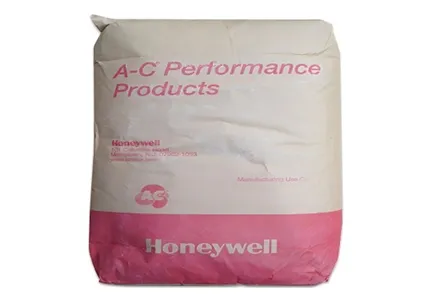
IGM ES A 198 is a polyfunctional high-molecular-weight amine co-initiator in the IGM Esacure series, specially designed for various UV radiation curing systems. As a synergist, when compounded with Type II photoinitiators, it achieves high-speed curing in both clear and pigmented systems. Under UV light, it effectively promotes free radical generation, accelerates photopolymerization of unsaturated prepolymers such as acrylates with mono

Synergistic co-initiator advantage - Compounded with Type II photoinitiators, greatly improving curing speed and enhancing deep curing effect
Polyfunctional structural feature - Polyfunctional high-molecular-weight amine structure, strong synergistic activity and wide application range
Dual-system adaptability - Suitable for both clear and pigmented UV systems, no impact on base color after curing, good color stability
Low environmental load advantage - Low odor, low yellowing and low migration, meeting strict environmental standards, suitable for sensitive scenarios
Easy processing and compounding - Easy to disperse and weigh, can be flexibly compounded with various UV formulations, convenient operation
Water-based UV coatings - Water-based wood and plastic UV coatings, synergistic curing, improving film wear resistance and gloss
Pigmented UV inks - Screen and offset pigmented UV inks, suitable for paper and plastic substrates, fast curing and full color
Transparent UV varnishes - Various transparent UV varnishes, low yellowing property, maintaining high light transmittance, good decorativeness
Environmental UV adhesives - Low migration UV adhesives, suitable for precision bonding scenarios, meeting strict environmental requirements
Food packaging UV systems - Low migration and low extraction value, suitable for food packaging-related UV curing products, safe and compliant
| Chemical Type | Polyfunctional high-molecular-weight amine co-initiator |
| Chemical Composition | Polyfunctional high-molecular-weight amine compound |
| Alias | ES A 198 Co-initiator, UV Synergistic Curing Additive, Esacure A 198 |
| CAS No | 925246-00-0 |
| Molecular Formula | Adapt to polyfunctional high-molecular-weight amine structure |
| Appearance (25°C) | Pale yellow to yellow transparent liquid |
| Purity | ≥98.0% |
Q1: What is the primary mechanism of photoinitiation for IGM ES A 198?
A: IGM ES A 198 is a Type II photoinitiator that operates via hydrogen abstraction, generating reactive radicals upon UV exposure in the presence of suitable co-initiators such as tertiary amines or alcohols.
Q2: Which UV wavelength range is most effective for activating IGM ES A 198?
A: It exhibits strong absorption in the UVA region, with optimal activation typically occurring between 320 nm and 380 nm. Performance is best under medium-pressure mercury lamp irradiation or LED sources emitting within this range.
Q3: How does IGM ES A 198 compare to benzophenone in terms of yellowing tendency and odor?
A: Compared to conventional benzophenone derivatives, IGM ES A 198 demonstrates significantly reduced post-cure yellowing and lower volatility, resulting in minimal residual odor—making it well-suited for applications where appearance and sensory properties are critical.
Q4: Is IGM ES A 198 compatible with acrylate-based and hybrid (acrylate/epoxide) formulations?
A: Yes, it is widely used in free-radical acrylate systems and shows good compatibility in hybrid formulations when paired with appropriate cationic co-initiators and sensitizers. Compatibility should always be verified experimentally due to formulation-specific interactions.
Q5: What is the typical dosage range for IGM ES A 198 in standard UV-curable coatings and inks?
A: Dosage depends on formulation requirements, film thickness, and irradiation conditions, but it is generally used at low concentrations—typically ranging from 0.1% to 2% by weight relative to total solids.
Contact With Us:
E-mail: wangxingqiang@ericwchem.com
Have a Questions? Call Us:
Add:
Building A1, Jiete Industrial Park, Huangpu District, Guangzhou City, Guangdong Province, China
 English
 Español
 tiếng việt
 русский