English
 Español
 tiếng việt
 русский
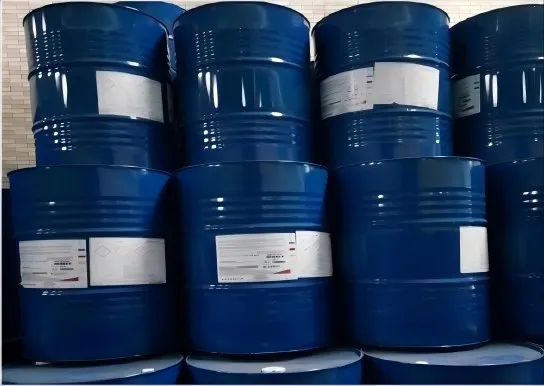
Clariant Genamin T01/5000 is a polyetheramine wetting agent launched by Clariant, a triamine synthesized based on propoxylated glycerol, with an average molecular weight of 5000-6000g/mol, containing terminal primary amine groups, which can complete various typical amine reactions. It has both high-efficiency wetting and amino reactive activity, suitable for multi-system formulations, and is a high-performance amine additive and synthetic intermediate in industrial and material fields.
Strong amino reactivity - Contains terminal primary amine groups, suitable for various typical amine reactions, high synthesis compatibility
Stable and controllable molecular weight - Average molecular weight 5000-6000g/mol, small performance difference between batches
Integrated multiple functions - With wetting, dispersing and synthetic intermediate functions, simplifying formula systems
Excellent system compatibility - Suitable for most water-based, solvent-based and solvent-free systems, wide adaptability
100% active and efficient - No diluted ingredients, ideal reaction and wetting effect at low dosage
Polyurea material synthesis - As an intermediate to synthesize polyurea elastomers and polyurea coatings, improve product strength and toughness
Epoxy curing system - Used as epoxy resin curing agent, optimize the mechanical and chemical resistance properties of cured products
Composite material preparation - Enhance the interface adhesion of composite materials, improve overall mechanical and durability properties
Oilfield chemical additives - Used as an additive in fracturing fluids for shale gas extraction, improve fluid performance and formation adaptability
Industrial wetting additives - Used in metalworking fluids and cleaning agents, improve system wetting and dispersion effects
| Brand | Clariant |
| Chemical Type | Polyetheramine wetting agent |
| Chemical Composition | Propoxylated glycerol-based triamine |
| Average Molecular Weight | 5000-6000g/mol |
| Functional Group | Terminal primary amine groups |
| Active Ingredient Content | 100% |
| Product Form | Liquid (typical value) |
| Ionicity | Non-ionic |
| Viscosity (25℃) | 800-1200 mPa·s (typical) |
| Density (20℃) | ~1.03 g/cm³ |
| Amine Value | 0.8-1.2 meq/g |
Q1: What is the primary function of Genamin T01/5000 in industrial formulations?
A: Genamin T01/5000 is a cationic surfactant designed primarily to enhance surface wetting and substrate penetration—especially on low-energy or hydrophobic surfaces such as plastics, pigments, and filled polymers. It supports uniform dispersion, improves interfacial adhesion, and reduces surface tension in aqueous and solvent-based systems.
Q2: Is Genamin T01/5000 compatible with anionic or nonionic additives commonly used in coatings or inks?
A: Due to its cationic nature, Genamin T01/5000 may undergo incompatibility or precipitation when directly mixed with strongly anionic surfactants or polyelectrolytes. Compatibility should be verified experimentally in the final formulation; sequential addition or use of spacer components (e.g., nonionic stabilizers) is often recommended to mitigate interaction risks.
Q3: How does Genamin T01/5000 perform under elevated temperature or acidic conditions?
A: Genamin T01/5000 exhibits good thermal stability up to typical processing temperatures encountered in coating drying or ink curing stages. It remains effective in mildly acidic to neutral pH ranges (approximately pH 4–7); performance may diminish under strongly alkaline conditions due to potential degradation of the quaternary ammonium structure.
Q4: What types of substrates show the most significant improvement in wetting with Genamin T01/5000?
A: Significant wetting enhancement is typically observed on polyolefin films (e.g., PP, PE), PET, PVC, and pigment agglomerates—particularly in waterborne gravure inks, flexographic coatings, and functional additive concentrates where rapid substrate coverage and reduced beading are critical.
Q5: What is the typical dosage range for Genamin T01/5000 in commercial applications?
A: Dosage is formulation-dependent but generally ranges from 0.1% to 2% by weight relative to the total system. Effective performance is often achieved at low concentrations, and optimization through lab-scale trials is recommended to balance wetting efficiency, foam control, and compatibility with other formulation components.
Contact With Us:
E-mail: wangxingqiang@ericwchem.com
Have a Questions? Call Us:
Add:
Building A1, Jiete Industrial Park, Huangpu District, Guangzhou City, Guangdong Province, China