English
 Español
 tiếng việt
 русский
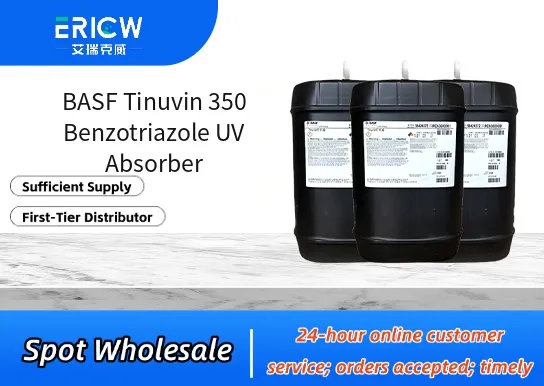
Highly effective UV absorber based on the benzotriazole chemistry, offering strong absorption in the critical 290–400 nm UV range.
Excellent compatibility with a broad range of polymers including polyolefins, styrenics, engineering plastics, and coatings.
Outstanding thermal and hydrolytic stability, enabling use in high-temperature processing (e.g., extrusion, injection molding).
Low volatility and minimal migration, ensuring long-term UV protection without surface blooming or plate-out.
Good lightfastness and synergistic performance when combined with hindered amine light stabilizers (HALS) and other additives.
Automotive interior and exterior plastic components (e.g., dashboards, bumpers, trim).
Outdoor construction materials such as PVC window profiles, cladding, and roofing membranes.
Packaging films for agricultural mulch, greenhouse covers, and UV-sensitive consumer goods.
Industrial coatings for metal and plastic substrates requiring durable gloss and color retention.
Technical fibers and nonwovens used in geotextiles, awnings, and outdoor furniture.
| Chemical Type | Benzotriazole derivative |
| Product Form | Free-flowing off-white to light yellow crystalline powder |
| Appearance | Crystalline solid, free from visible impurities |
| Primary Applications | Polyolefins, PVC, PS, ABS, PC, coatings, adhesives |
| Key Features | UV absorption (λmax ≈ 340 nm), low volatility, polymer-compatible |
| Benefits | Long-term weatherability, color stability, process robustness |
| Recommended Use Level | 0.1–1.0 wt% depending on polymer and end-use requirements |
| Storage Conditions | Store in cool, dry place; keep container tightly closed |
Q1: What is the primary function of Tinuvin 350 in polymer systems?
A: Tinuvin 350 is a benzotriazole-based ultraviolet light absorber designed to protect organic materials—especially polymers—from photodegradation caused by UV radiation in the 290–400 nm range. It functions by absorbing harmful UV energy and dissipating it as low-level heat, thereby preserving color, mechanical integrity, and surface appearance over time.
Q2: In which polymer types is Tinuvin 350 most commonly used?
A: Tinuvin 350 is widely compatible with thermoplastics such as polyolefins (PP, PE), engineering plastics (e.g., ABS, PC blends), and certain elastomers. It is particularly valued in applications requiring long-term outdoor exposure, including automotive interior parts, agricultural films, and architectural profiles.
Q3: How does Tinuvin 350 compare to hindered amine light stabilizers (HALS) in UV protection?
A: Tinuvin 350 acts primarily as a UV absorber, providing frontline protection by filtering incident UV radiation. HALS function through a different mechanism—scavenging free radicals generated during photo-oxidation. For optimal performance, especially in demanding applications, Tinuvin 350 is often used synergistically with HALS to combine both preventive and reactive stabilization pathways.
Q4: Is Tinuvin 350 suitable for use in food-contact or medical-grade polymers?
A: Tinuvin 350 is not generally approved for direct food-contact applications under major global regulatory frameworks. Its suitability for medical or pharmaceutical packaging must be evaluated case-by-case based on full formulation testing, regulatory status of the final article, and compliance with applicable migration and biocompatibility requirements.
Contact With Us:
E-mail: wangxingqiang@ericwchem.com
Have a Questions? Call Us:
Add:
Building A1, Jiete Industrial Park, Huangpu District, Guangzhou City, Guangdong Province, China